I would drive 500 miles…

And I would drive 500 more. In fact, over 1500 miles were completed in a car that most of the population would have thrown in the bin by now.  Especially with that gear change.

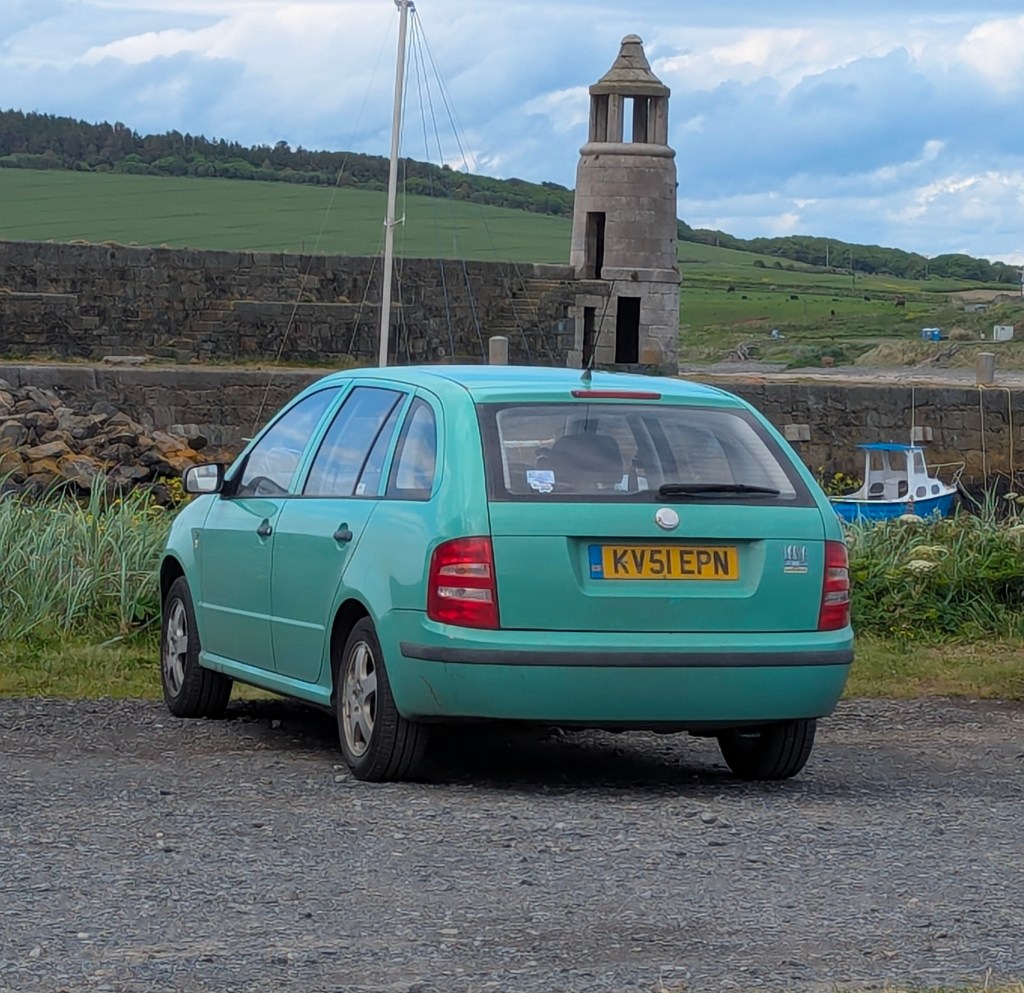
McSkoda at Port Logan.

The mileometer clicked over to 137,000 during our holiday, which isn’t bad for a car we bought with 94,000 on the clock and one we were only going to keep for six months or so. 43,000 miles and four and a half years later it’s still providing literally some service which includes my wife’s 45 mile round trip to work 5-6 days a week.

However, since the start of the year it’s been battling us. A failed alternator during the Christmas period kicked it off, and then an interesting* array of electrical maladies that saw various parts of the ignition system replaced, the battery replaced, various different diagnostic checks using different machines, swapping out sensors here and there, being bullied into cleaning the earth strap, checking and cleaning any electrical connection there was to check and clean and many hours spent pulling hair out only for the same fault to reappear (cylinders 1, 2, 3 and 4 misfire) repeatedly. The compression was tested and was okay, and it runs far too well for there to be any form of mechanical issue such as head gasket failure, which the old pushrod engine is susceptible to. It just loses a bit of power as the dreaded engine management light comes on. Which it does frequently. I have owned a multitude of Italian and French cars, and none of them have displayed such rampant electrical tosspottery as this car has in my custodianship. The (VW engineered) electrics in this car are absolute toss, and that seems to sum up my experience and opinion of VW Group electrics full stop.

McSkoda Café at Castle Douglas.

With all that in mind, we’ve not long returned from an holiday which included a fair amount of driving – 1522 miles of it, in fact. From our home county of Cornwall (the really south westerly bit) to Lancaster (the not at all south westerly bit) and then onto Stranraer (the really south westerly bit of Scotland), and then all the way back again. Typically, a few days before we were due to set off, the oil pressure warning light decided to make its presence known, but not only does the light come on, the dashboard also beeps three times VERY BLOODY LOUDLY. Assuming it would be a sensor, I ordered one and went to replace it and that’s when the wiring and the electrical connector for the oil pressure sensor disintegrated. Brilliant. So I left it as it was, removed the instrument panel and put some tape over the loud speaker and some tape over the oil light. Fixed*.

It wasn’t all doom and gloom though because, engine management light aside, the Fabia took it all in its stride and motored on without fault. I drove the entire length of the journey with the code reader plugged in and in a place where it was safe to operate. With it set up permanently over the “Erase Codes” function, as soon as the light came on and it lost a bit of power, I’d clear the errors and performance, such as it was, would be restored. But all this seemed to add to the adventure of the trip, guessing what rpm or what speed the light would illuminate and using the code reader as a sport button.

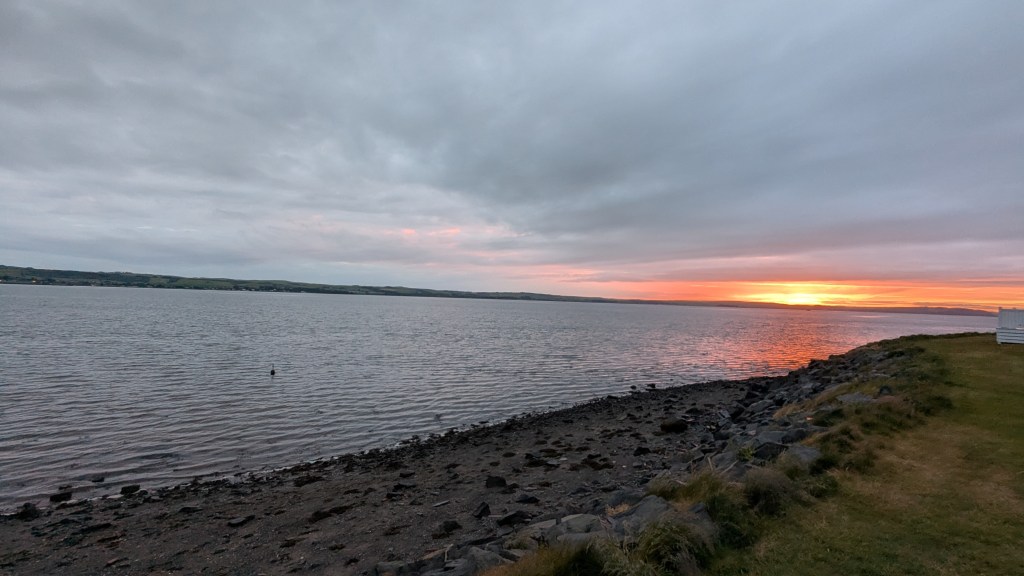
The view from our campsite

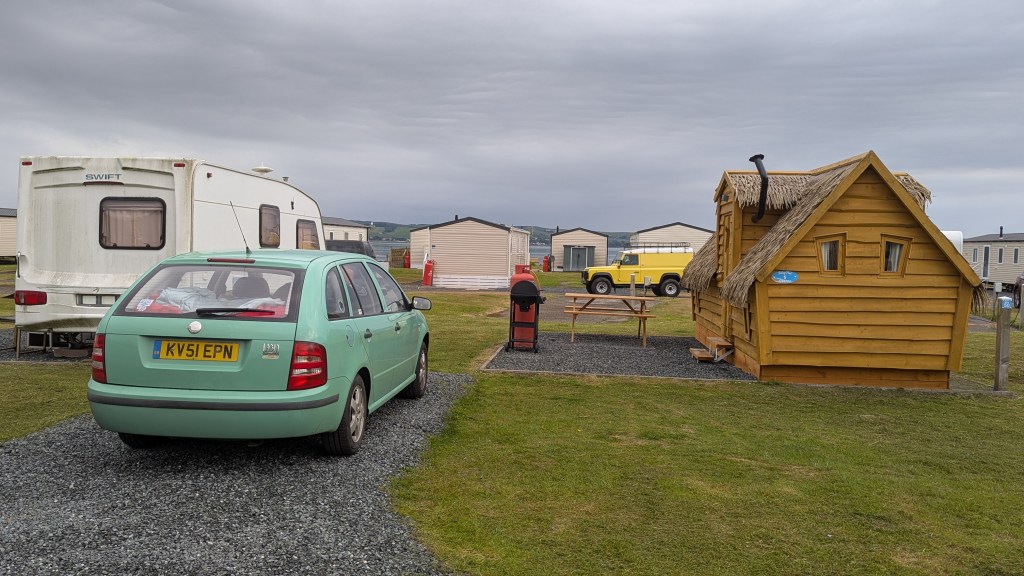
Our pod, with bonus Land Rover Defender

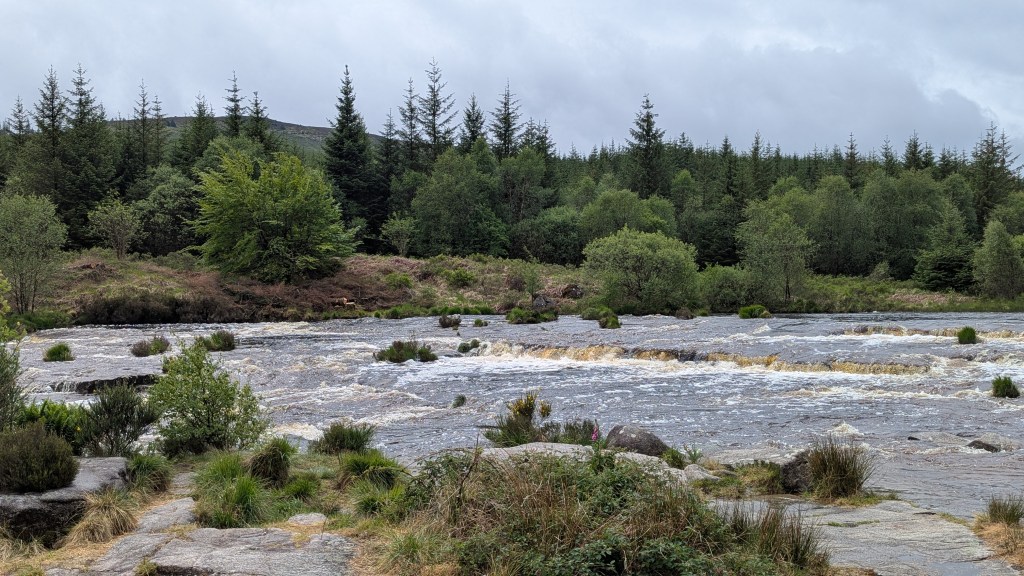
South West Scotland is a stunning, breathtaking part of the world and we got to explore a small portion of it. From the views of Loch Ryan, where our glamping pod was situated, to the sweeping roads and amazing scenery. It makes parts of Cornwall look like a nursery project. So much unspoilt land, alpine like surroundings, brooks and lochs, castles and gardens. I fell for it hook, line and sinker. And the people we met were really nice, too, even if they thought we were “wee English pricks”.

How beautiful is this?

There’s so much more of Scotland that I want to explore that I’ll probably want to go there on holiday for the next twelve years. I’d also be delighted if I got to do it in the Fabia, but I won’t hold my breath.

At the start of this load of twaddle, I wrote that most people would have thrown this car out by now. It’s old, it’s past its prime, it’s just an old Skoda Fabia, it’s not rare enough for anyone to care. It’s slow, it’s underpowered, it’s not all that refined and it’s certainly not a driver’s car. So what’s it actually got going for it?

Rally spec

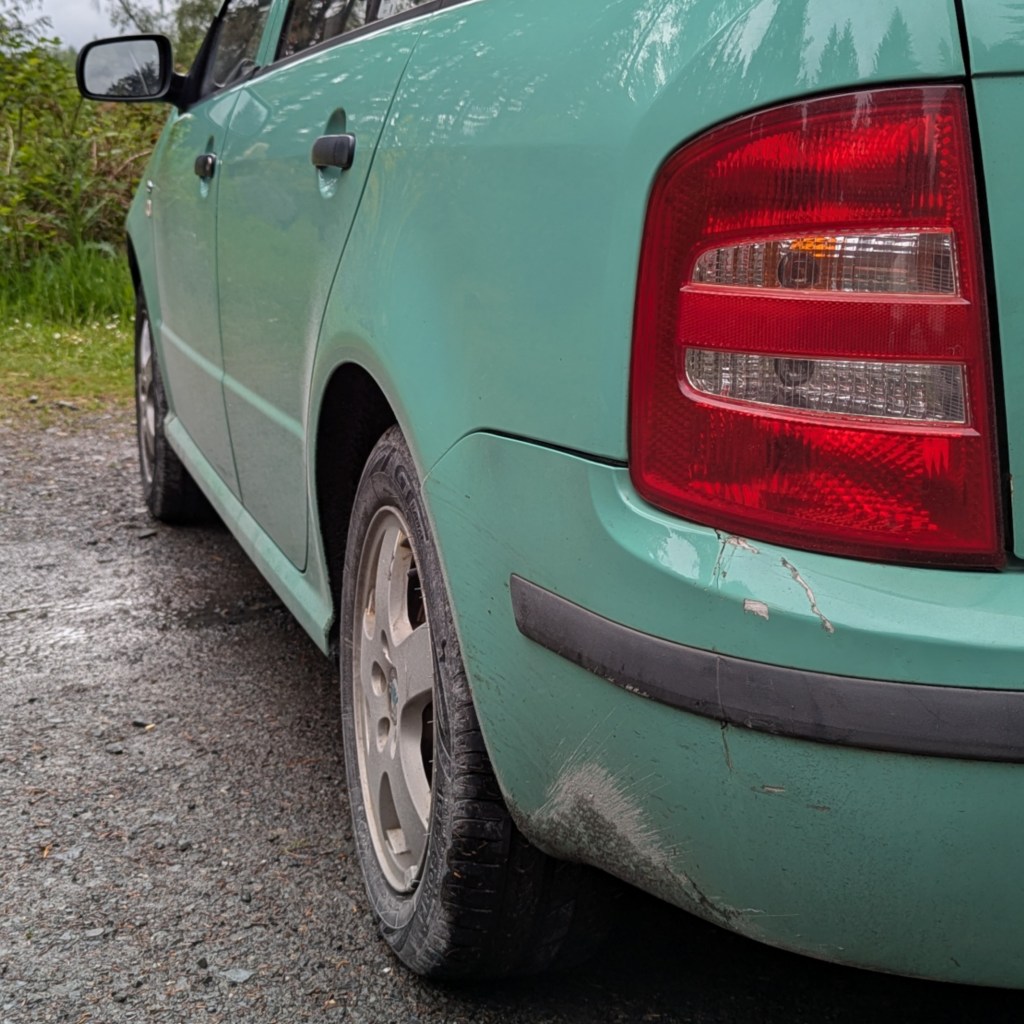
Well, for a start, it’s Fantasy Green which as we all know is Sub-Zero cool when it comes to colours. It’s practical and really bloody useful. Mechanically, it feels like the car will rattle on for quite some time yet – the oily bits have been taken care either by solid build or routine maintenance (I know, right? Where’s that multicoloured Panda?) Items that have needed attention or replacement aren’t outside the realms of routine, wearing out or just old age.

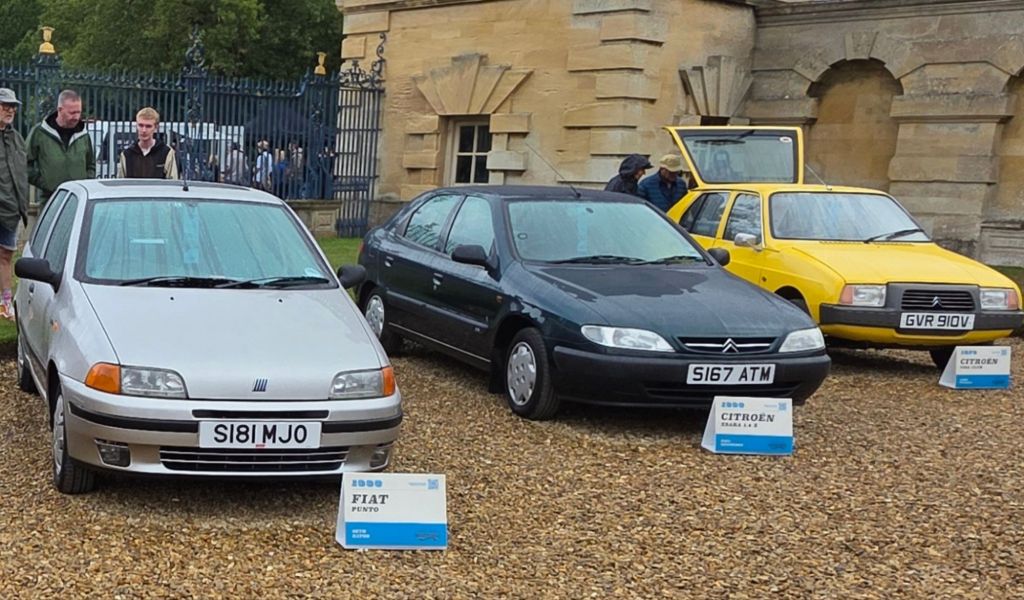
Most importantly of all, it has managed to worm its way into our lives like some big, daft dog with a stupid grin that wants all your lunch despite just being fed. We have had many adventures as a family in this car. We’ve been on holidays and road trips, it’s been shelter, it’s been a picnic table in the wet, it’s been an emergency service vehicle, it’s been a rally car on loose surfaces, it’s been in convoy with mates to car events. It was at the Festival of the Unexceptional last year and got more attention than my Punto and 216 did in previous years combined. My mates have laughed with me at the comedy trim collapsing and falling off. My wife and I enjoy a game of “What Will Fall Off Next” on every journey.

If only those sodding electrics would get in the bin. Having said that, I’m approaching my mid forties and quite often my own ECU throws up spurious errors that neither I nor my Doctors can explain.

Look at its daft, stupid green face.

But it’s such a plucky little car and it feels like it’s still got something to give. We’re not ready to give up on it yet. Because of all that, this may actually be one of my favourite cars I’ve owned. Indeed, as I write this, my Rover 216 is up for sale. The car I once stated I’d never sell, the one that was my forever car is going. I’ve found some pretty major work that needs doing and I don’t have the time, space, talent or finances to bring it back. All whilst the car I bought as a 6 month stop gap winter beater is still here. I have a feeling I’ll miss the Rover less than I think, and when the Skoda finally goes that’ll be a wrench…

I also have this insane thought of throwing a 1.8T under the bonnet but keep it looking weathered and standard. Best get saving, then.

One last Skoda thing before I leave you with some spots:

Holiday snaps:

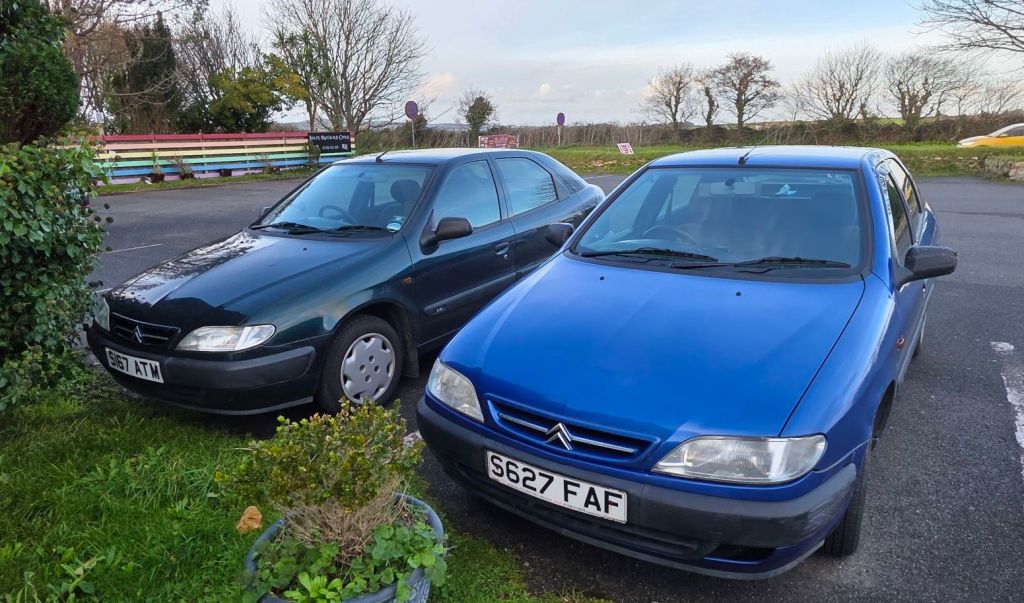
Welcome to the room, Xsara

Back in October, our beloved Fiat Punto 60SX went in for its MoT test which would turn out to be its last. The test outcome resulted in us selling it to a friend who broke it for spares. A sad end, maybe, but it’s keeping other Puntos on the road and the engine and gearbox assembly are being fitted to a Cinquecento Sporting for a bit of an upgrade. So we’d be down to one functioning car, one that would also be requiring a bloody MoT test soon.

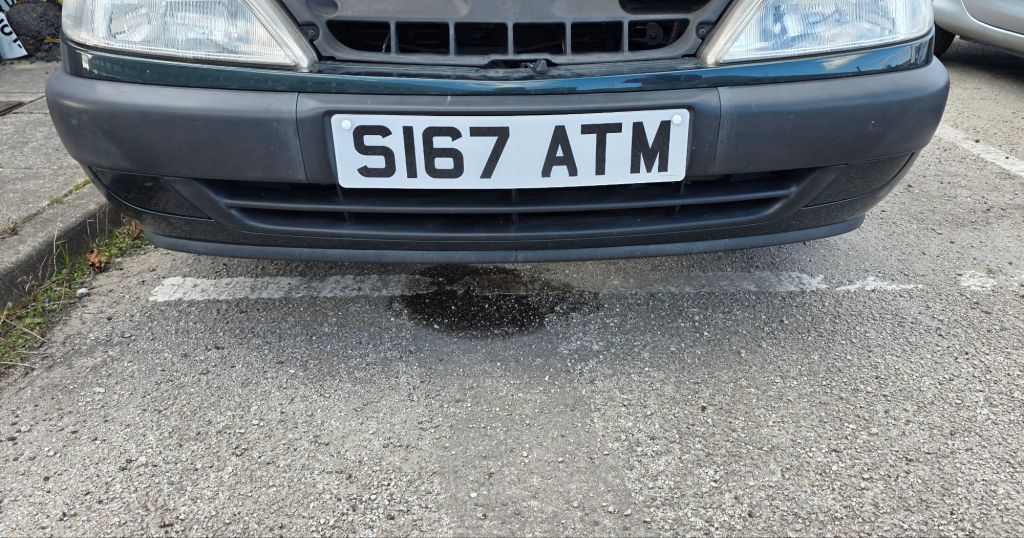
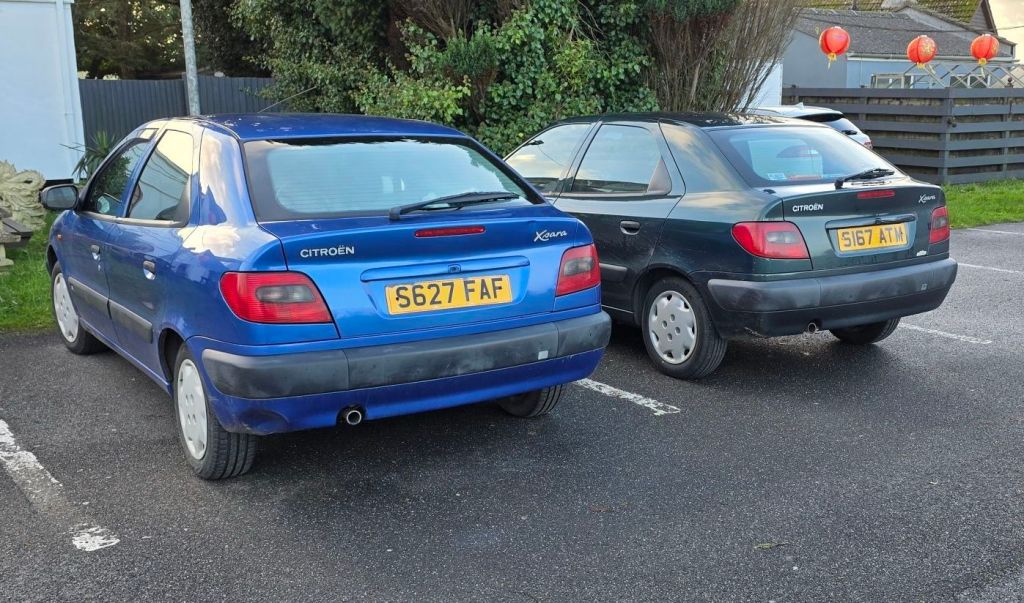
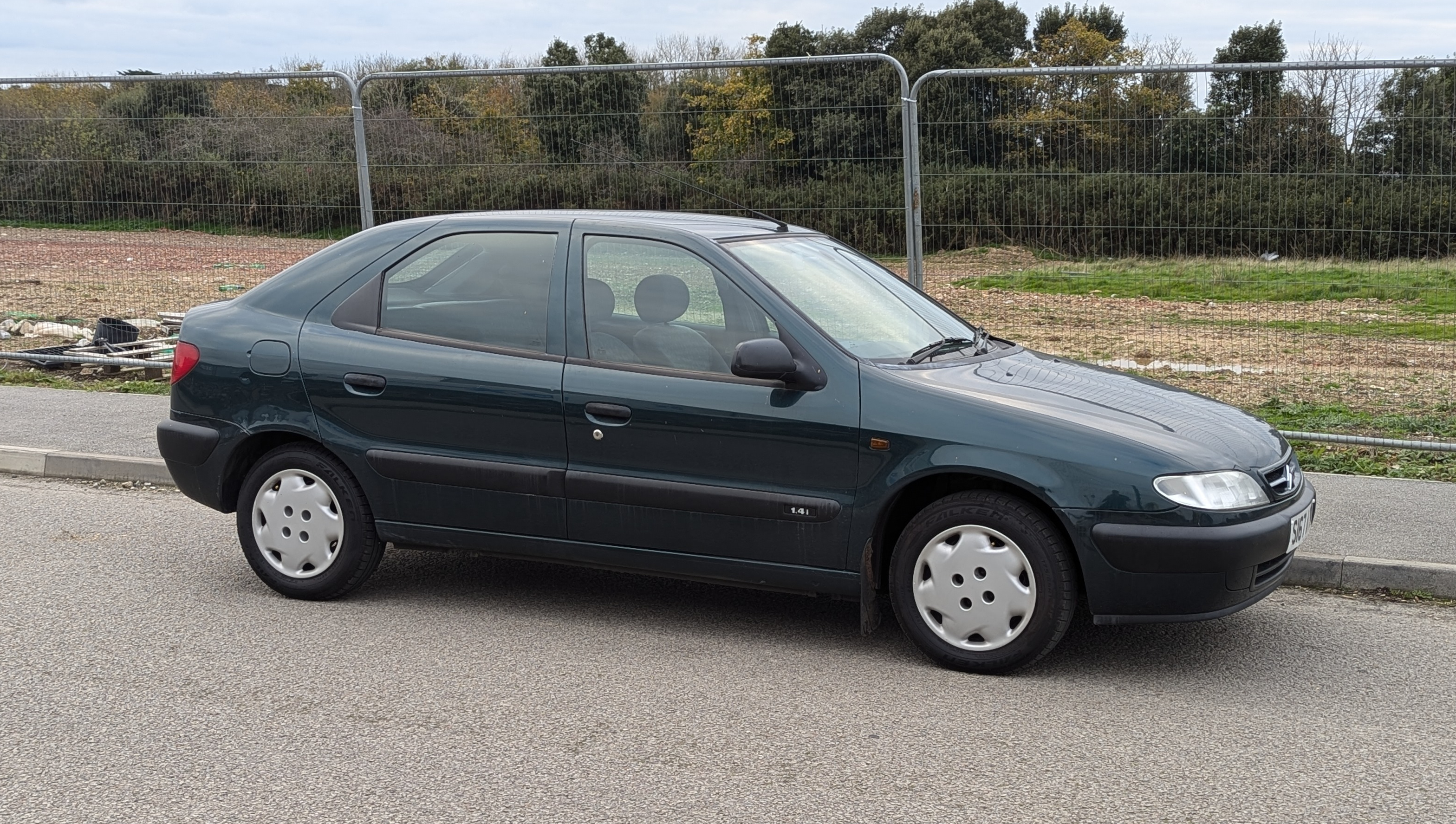
So, a call to my mate located in the Toxic South of England to see what fine jalopies he had in stock was on the cards, and to be fair there was quite a selection. But the one that caught my eye as he bombarded my inbox with pictures (not LIKE THAT) was a metallic green base model Citroën Xsara. A largely forgotten medium hatchback from the 1990s with fairly bland styling (for a Citroen, anyway), so naturally it was right up my rue.

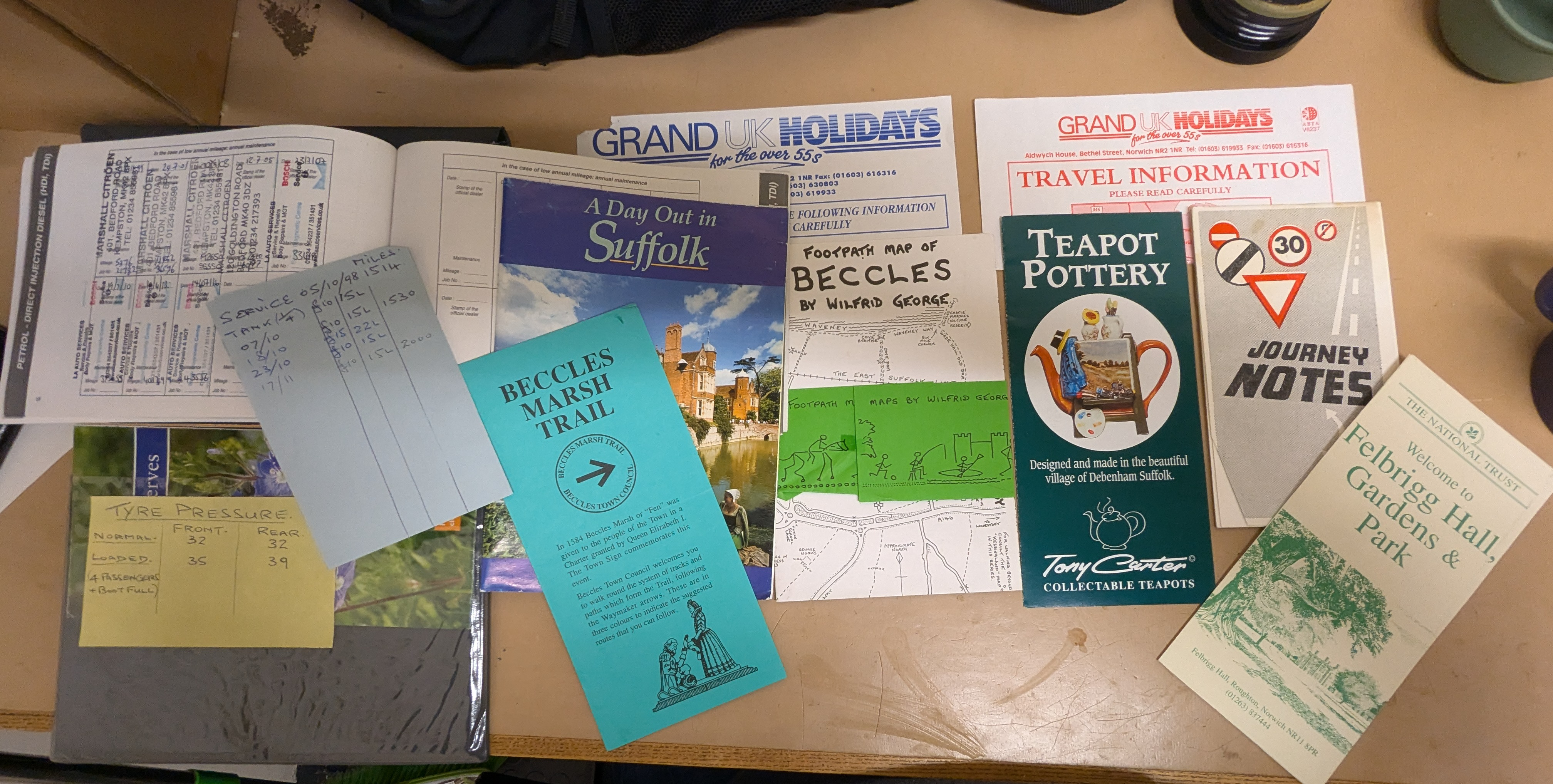
Upon collection I was greeted by a very tidy example of said forgotten Citroën medium sized hatchback, clearly owned by an older person as the light scuffs at all four corners would prove. But despite that, it had been well loved and incredibly well maintained. There are some other, rather charming, pointers as to the age group of the previous owners, too. A folder containing all sorts of leaflets and pamphlets for walking days out, holidays for the over 55s, hand drawn maps, tyre pressures and radio codes written down on post-it notes and a hand written fuel economy log came with the car. You’ll also find some household carpet in the back, perfectly cut to size and shape to protect the rear footwells and carpets. The driver’s side carpet floor mat is stitched with the owner’s initials.

As you can see from the above image, the rear seats have barely been sat on. Everything in the back is in really nice condition and the floor under the household carpet is basically brand new. There’s plenty of room in the back, too, and the one-piece bench seat is quite comfortable. There’s no 60/40 split on this car on account of it being pure entry level. There’s two inertia reel seat belts and a lap belt, pockets on the back of the front seats but no rear speakers – only the grilles.

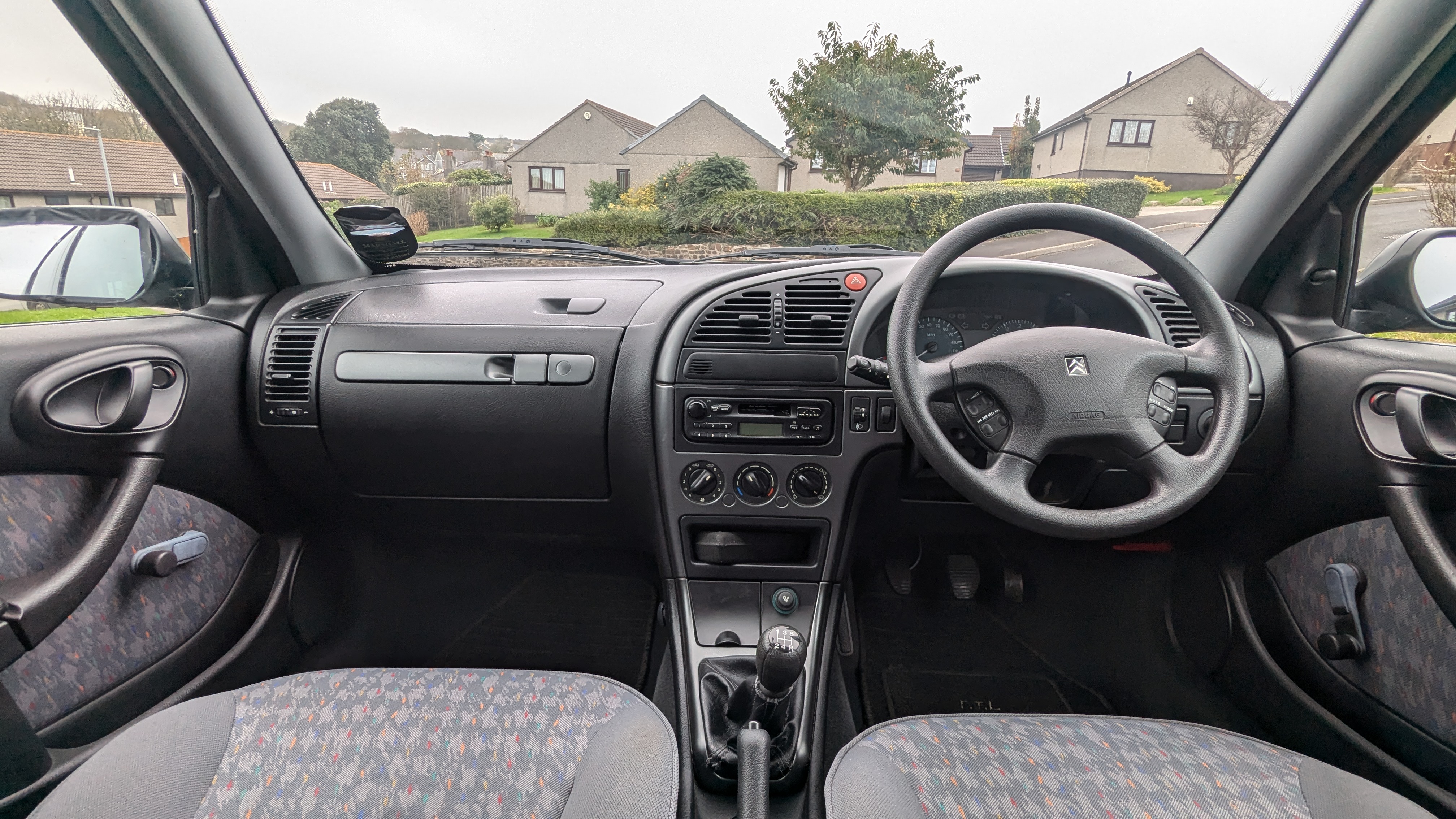
Up at the front, we find it’s a bit more used, but there’s very little wear on the seats or the steering wheel. However, the storage compartment lids on the front doors have seen better days. We also get to see how wonderfully basic it is from the driver’s seat, too. There’s exercise windows all round, which I’m more than happy with, a manual driver’s mirror and an electric adjust for the passenger mirror, a radio cassette and no rev counter. In place of the rev counter is a massive clock (I said CLOCK). It’s so big, it’s a two hander. All controls are to your finger tips with the rear heated screen button on the end of the wiper stalk – very reminiscent of the Fiat Tipo. The horn is on the end of the indicator stalk, head lights are operated by turning the indicator stalk and the fog light function is on the same stalk. All brilliantly logical, as are the steering wheel controls for the radio cassette.

Like the 306, it has two glove boxes but it is very sombre for a Citroën, broken up only by some typically 1990s mad fabric stylings on the seats. As mentioned above, it’s all very logical and carrying on where the ZX left off, all very ergonomically sound. And because there’s a driver’s airbag, there’s no single spoke steering wheel either, though they were banished when the AX and XM were facelifted. The door bins are big enough to carry things and are wide enough to hold a bottle of fizzy drink, and there are two large storage containers on both front doors with lids forming part of the arm rest. At first glance you don’t realise there’s anything there, but they are useful for hiding things in, such as Pierre’s wife’s jewellery in the passenger door compartment and his mistress’s jewellery in the driver’s door compartment.

The boot is a very good size, too. It can fit all the baguettes and cheese you could hope for, but brilliantly there are straps behind the wheel arch area to keep your bottles of Châteauneuf-du-Pape upright and not rolling around the boot area. Thoughtful car.

What’s it like to drive, then? Well, more entertaining that it has any right to be. Let’s not forget these are essentially a rebodied ZX therefore the same underpinnings as the Peugeot 306. The steering is nicely weighted and it turns in with a fair amount of body roll but no drama. To be fair, I’d expect a reasonable amount of body roll as it’s a Citroën, but because of the ground clearance and suspension travel, the pay off is a really nice ride. Indeed, the ride makes light work of the appalling roads and potholes in Cornwall, and it’s certainly a fair few rungs up the ladder than our Skoda Fabia which rattles its interior to pieces as soon as it senses some gravel.

It’s no ball of fire, but it’s lively and quick enough. It’s a 1360cc engine from the TU family, which means robust, reliable and easy to fix should it go wrong. Developing 75bhp (when new, anyway) that’s enough to propel the Xsara to 62mph in around 12 seconds (when new, anyway) and on to a top speed of 107mph (when new, anyway). All joking aside, it feels like it could probably achieve the claimed 107mph top speed, but it’s too noisy to attempt it, plus there’s the question of legality, your honour.

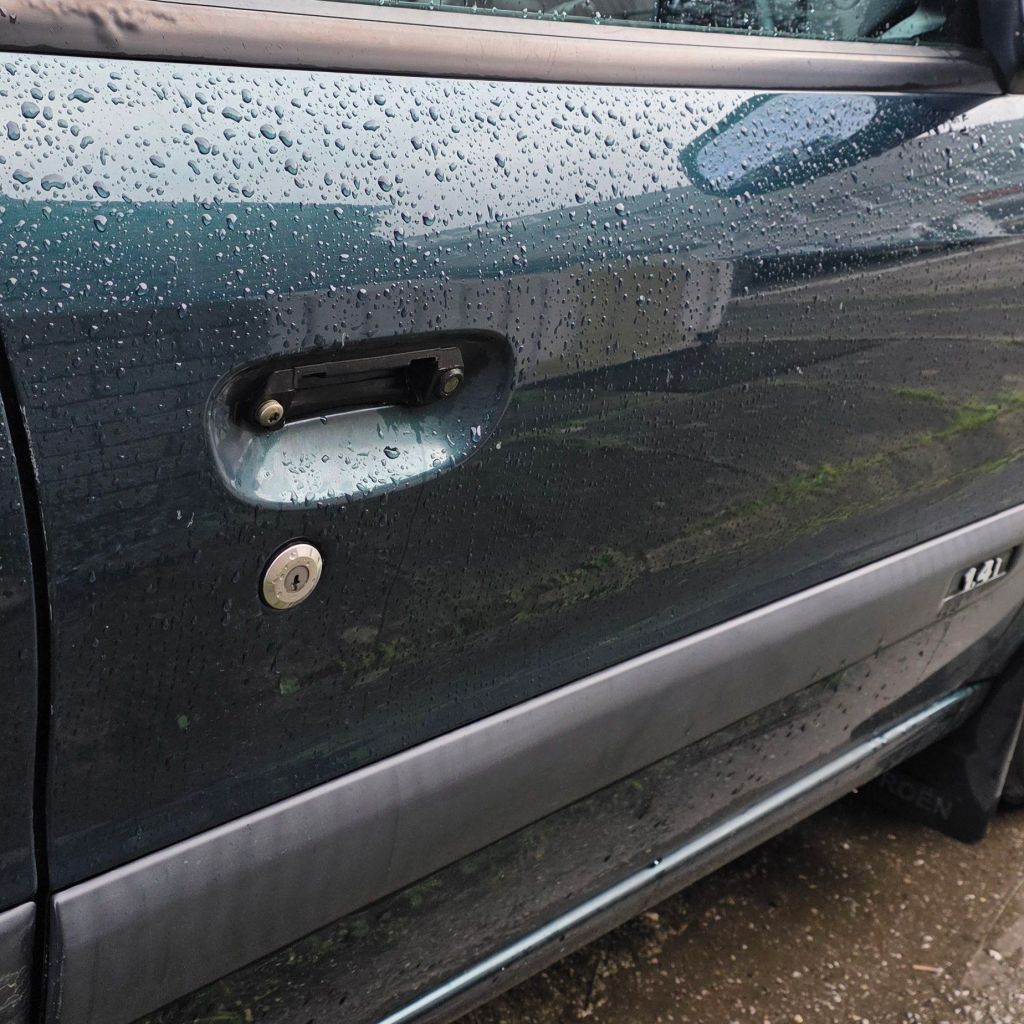
What’s it been like in the last three months, and has anything fallen off? Well, yes. As is the way with Citroën gear knobs of this era, this one fell apart like an easter egg, but alas this was not covered by the Telescopic Warranty (out of sight, out of mind) provided by The Mr so-called Journalist I bought it from. No bother, I found a new identical gear knob on eBay for next to nothing and has now been fitted. Oh, and 85% of the central locking works 60% of the time. Other than that, it has been brilliant so far.

Especially as over the Christmas period, the Skoda decided it no longer wanted to provide the car with electricity and shat its alternator. As my wife has been using it for her 43 mile round trip to work, it was time to fire up the Xsara and drop my wife to work and pick her up each day, meaning it was doing 86 miles a day for the best part of two weeks. Mind, it did a 350 mile road test when I brought it home from Cambridgeshire. And we did Liverpool and back in a weekend at the start of December. Details of that trip can be found here.

Remember, All Of The Internet tells you all French cars are shite. Don’t believe them. I don’t have any plans for this except use it daily, maintain it and take it to Festival of the Unexceptional this year. I’ll say this quietly so’s my Rover can’t hear me, but I think I prefer this to my 216. Here’s to peasant spec Citroën motoring.

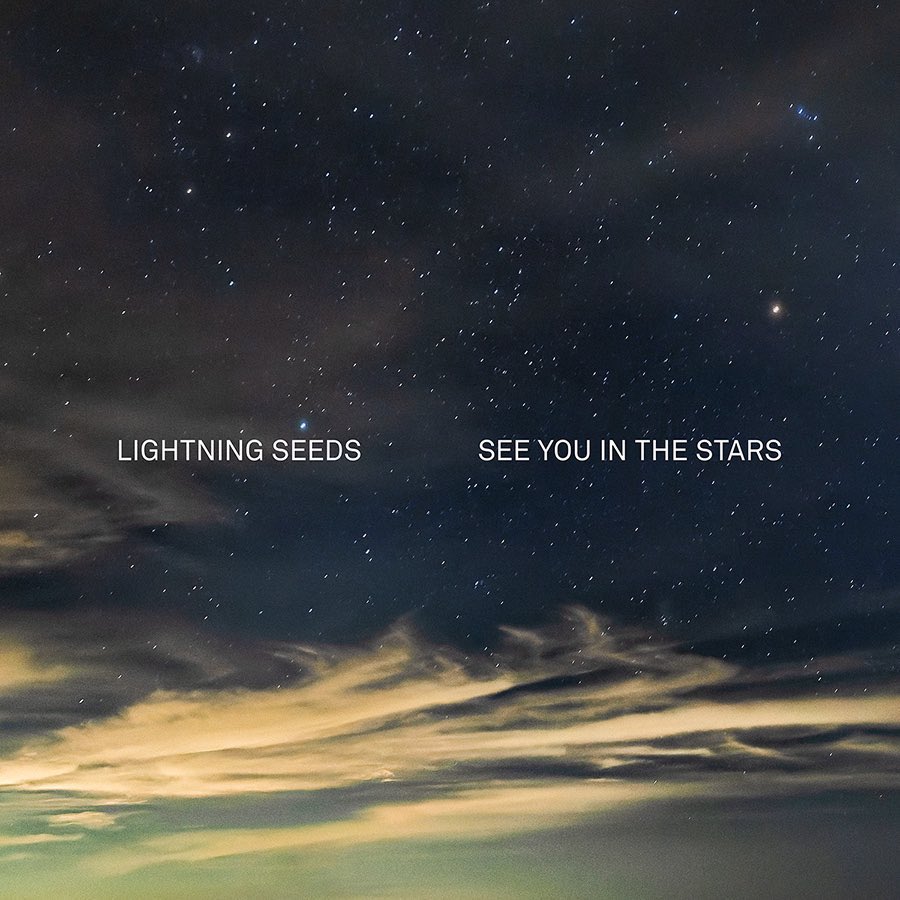
See You In The Stars

I love writing about cars and music, and when I write something about music, or an album I like, I tend to write about it quite a while after the initial release. That gives me time to get to know the album, get to enjoy it and listen to it in many different scenarios – on the turntable, in the car, at work or relaxing with the headphones on. In this instance, it’s pretty much a year down the line since this album was released, so I’ve really got to know it. But then, we have had quite a wait for this album in the first place…

Something like this only happens once every million and six years, and I’m not talking about some fantastic geological event, it’s much more important than that. It’s a new Lightning Seeds album, and as such I feel absolutely obliged to write about it because, well, it’s the Lightning Seeds and they’ve got me through thick and thin. Rough with the smooth. Clean with the dirty. You get the point. It’s the first new music from Ian Broudie in thirteen years, which was the very underrated Lightning Seeds album Four Winds. It’s full of Broudie’s trademark melodies, brilliantly layered vocals, immaculate production and more than a hint of melancholy in the lyrics. Ian has claimed that he was anxious about releasing new material, but he needn’t have been.

But before we get to the album, I’m going to waffle about the band for a little bit. As far as I’m concerned, they’ve never sounded better. That’s not a slight on other lineups, but this lineup works. I’ve seen them a couple of times in the last couple of years and the playing is fantastic, they sound energised and there’s a sense of really wanting to be up on the stage. There’s a brilliant rhythm section made up of long-time Lightning Seed Martyn Campbell on the bass, and Jim Sharrock (nephew of Seeds original drummer Chris Sharrock) on the drums. Get a decent rhythm section and your band is made, and this rhythm section is, erm, marvellous. Perfect, you could say. Ian’s son Riley is an excellent presence on guitar, and there’s some fantastic Father – Son moments on stage. Adele Emmas brings some great keyboards, samples and lovely vocals to the band. And Ian? Well, he looks like he’s having the time of his life, and that comes across in the performances.

Before we even press the play button, the cast of players and singers on the album is boss. Among others, Miles Kane, Terry Hall, James Skelley and a welcome return of Angie Pollock join the current lineup. The album starts off perfectly with Losing You, a song about falling in and out of love and trying to be as positive as possible – say yes rather than no. It was recorded in an afternoon with foot tapping and lap slapping for percussion in a similar vein to Buddy Holly or Paul McCartney. I love the vocals and the harmonies are fabulous and in a shade over 2 and a half minutes it’s done, but it builds up to track two beautifully.

Track two is one of the (many) stand-out songs and it’s Emily Smiles. More of those harmonies and a groovy 60s vibe. Chosen as the second proper single to promote the album, there was a great promo video recorded featuring Ian, Riley, Martyn, Adele and Jim. Emily Smiles is bittersweet, as on the one hand it’s full of classic Lightning Seeds hooks and wouldn’t have been out of place on Dizzy Heights. To paraphrase Ian, It’s about how life can be changed by unexpected events and moments and how differences can be solved simply by a smile. With the passing of time, we realise Emily Smiles was the final song co-written with the late, great Terry Hall. A close friend and frequent collaborator of Ian’s, he died in December 2022 after battling pancreatic cancer. Being a massive fan of Terry’s – his album Home is one of my all time favourites – it’s a celebrity death that’s hit me hard. But the fact that the last song he co-wrote with Ian is such a stunner is a fantastic way to remember him.

Musically, Green Eyes seems to follow on from Pure. It has a lovely little melodic flourish throughout that resembles the melodic flourish from Pure, and the lyrics follow a similar theme, too. Falling in love, hoping it won’t end, and the lyrics “my pages are torn, but you’re reading them right” floor me every time. Another stand out song on the album

Great To Be Alive is such a hopeful tune and was the first song recorded for the album. Great To Be Alive was recorded with, co-produced and co-written by James Skelley of The Coral. The message of the song is no matter how bad things can be and hurt you can be, life really is worth living, get out there and enjoy it. Great To Be Alive should be people’s mantra.

Sunshine was the first glimpse we all had of new Lightning Seeds material and after the first listen, I was incredibly happy. Really sounded like they hadn’t been away. The message conveyed is it doesn’t really matter what’s going on in the world, when the sun comes out everything is better. I’m sat on a cold, wet Cornish October evening writing this and listening to this song as I type, and instantly I’ve been transported back to summer. An absolute gem of a song.

Fit For Purpose. Such a dreamy melody with lovely strings, which add a touch of melancholy. By Ian’s own admission, he’s a blue soul. This song’s message is to take that darkness and face it head on, don’t let it beat you. We should all take Ian’s advice

Live To Love You is another song recorded with James Skelley in just a day. Delightfully simple, upbeat, acoustic and with irresistible harmonies once again. Absolutely love the guitars, too. Easily one of my favourites on the album. Sounds unbelievable on vinyl.

Permanent Danger is a song I can relate to only too well. Starting off with a drum machine beat and Ian’s unmistakable acoustic guitars. If ever a song could express what I feel and go through sometimes, this is it. It’s a fairly tough listen but probably has the most direct lyrics I’ve heard in a Lightning Seeds song. This is one I hold close, but it needs to be counteracted by listening to Fit For Purpose and It’s Great To Be Alive. Some days I think something’s gonna blow indeed.

For a bit of respite, the upbeat Motown-esque Walk Another Mile follows. According to Ian “This is two imaginary people, in my head, arguing about the end of a relationship and blaming each other.” Such a catchy tune, and I guarantee you’ll be humming it for hours.

See You In Stars. Oh boy. I’ve had a good cry at this one. Written as a love song to a friend of Ian’s that passed away. Someone who put him back on track after a particularly dark time. In Ian’s own words “this song is basically saying: I hope I see you later.” It’s the last song on the album as a tribute. My own story with this song is back in July I was supposed to be travelling from Cornwall up to Cambridgeshire to see a friend and join him for a big car show. Plans were thrown into slight disarray when a long time friend of the family died suddenly. I went to her funeral (in High Wycombe, the day I should have been travelling from Cornwall, but we came up a day earlier) and told her I’d see her in the stars as I was at the casket. As the wake was drawing to a close, I left and drove to Cambridge. Half way through the journey, Spotify (other streaming services are available) decided to play “I’ll See You In My Dreams” by Bruce Springsteen and immediately followed it with See You In The Stars. That finished me off so I had to pull over so I could have a good old sob. After what seemed like an eternity, I pulled myself together enough to continue the journey. Ever since, this song really sets me off (I’ve just listened again and had a moment) as it reminds me of our friend, plus others we love that have gone. I’ve adopted the sentiment of the title as my own. We’ll see them again one day . We’ll see them in the stars.
Twelve months on from initial release haven’t softened the impact of the album for me. There’s a myriad of emotions to explore, a great number of musical layers to peel. It certainly hasn’t got any less interesting. And it came at a time I really bloody needed it, too, just as Jollification did over 25 years before. Jollification became the soundtrack of me growing up, it was my go-to long player throughout my teenage years, I sought comfort in it when times were really bloody shit and can be credited for saving my life. But it’s not all baggage, because when the times were good, I made sure Jollification was there to create the soundtrack to fantastic memories – my wife loves it, my son knows all the words. But just over a week after the release of See You In The Stars, my Dad had a stroke serious enough that we nearly lost him. I sought comfort in the Lightning Seeds once again, and I had a new album to take comfort in. See You In The Stars got me through that period, and has become a companion just as the other albums have, such is the power and importance of music.

One last thing. Maybe two. They say never meet your heroes, but I’m here to tell you it’s utter bollocks. After the Bristol Jollification gig in September 2021, my wife and I met Ian and chatted to him for what seemed like ages, and he signed my ticket. We met Riley, too, and he’s a lovely lad. Absolute Gents and lovely fellas – don’t ever change. Also, this year I took my 12 year old son to his first gig, Lightning Seeds at Falmouth Week, and the upshot is he can’t wait for the next one.

If you’ve made it this far, thank you for reading my waffle. My next mission? Get all my Lightning Seeds rarities back online in some format…

Glorious Skodachrome

Nearly two years ago, another banger joined the fleet at Blog Roll Towers. What’s more surprising is, nearly two years on, it’s still parked outside Blog Roll Towers (and no, it’s not because it won’t start, it’s not a Ford you know). This is fairly unusual in that most cars I buy tend to last the journey home and not much more than that, which can be a little disconcerting as I have bought cars from the road I live on before. Anyway, this lump of pig iron had to undertake a fairly lengthy drive back home because while I’m in Cornwall, it was located in Chatteris.

What is it?

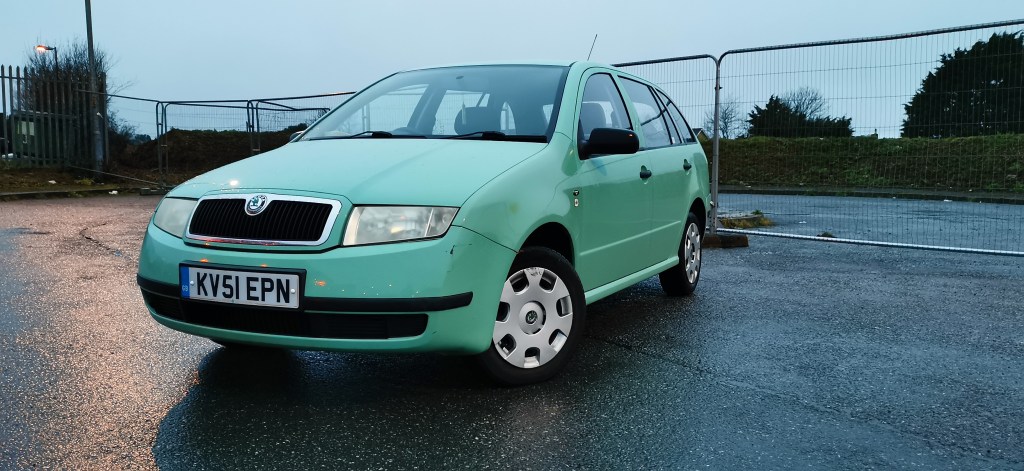
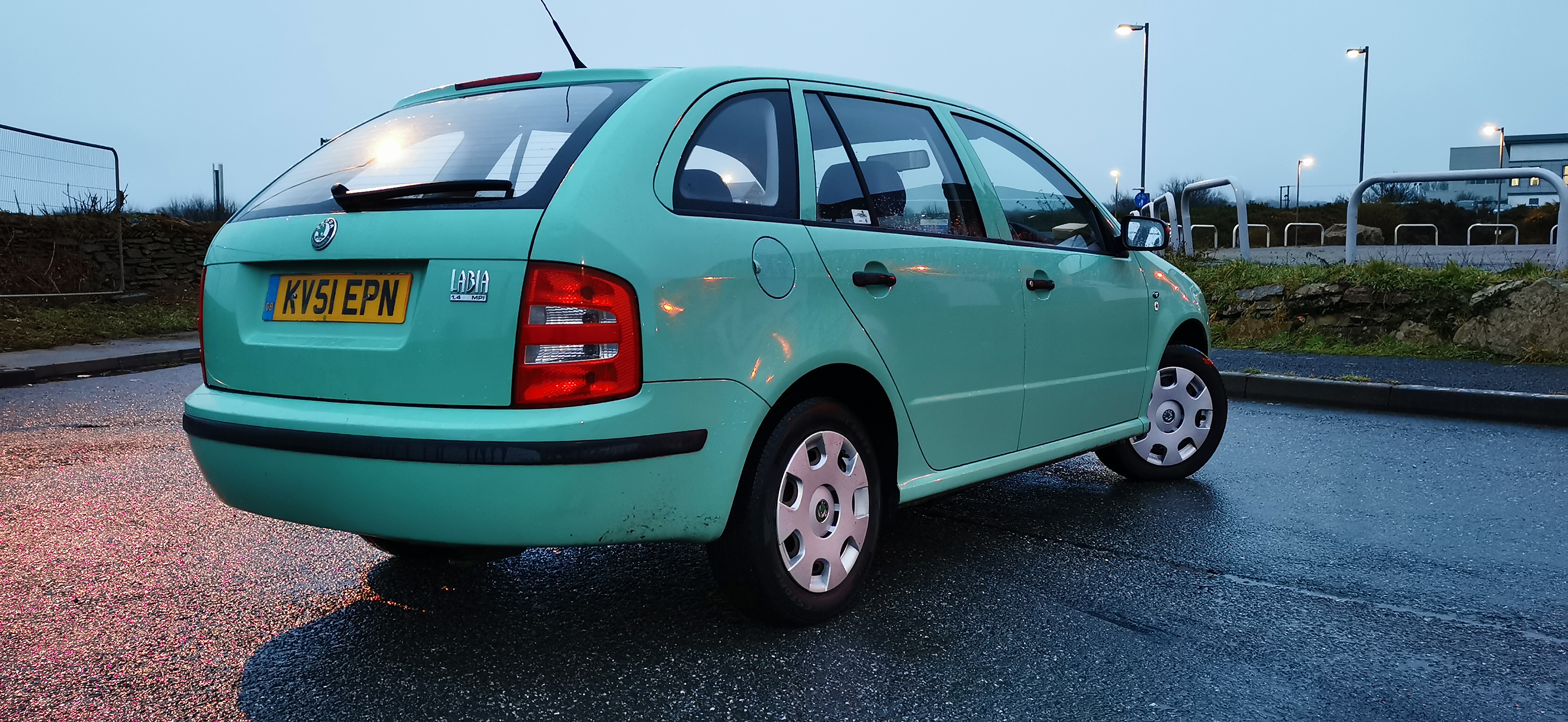
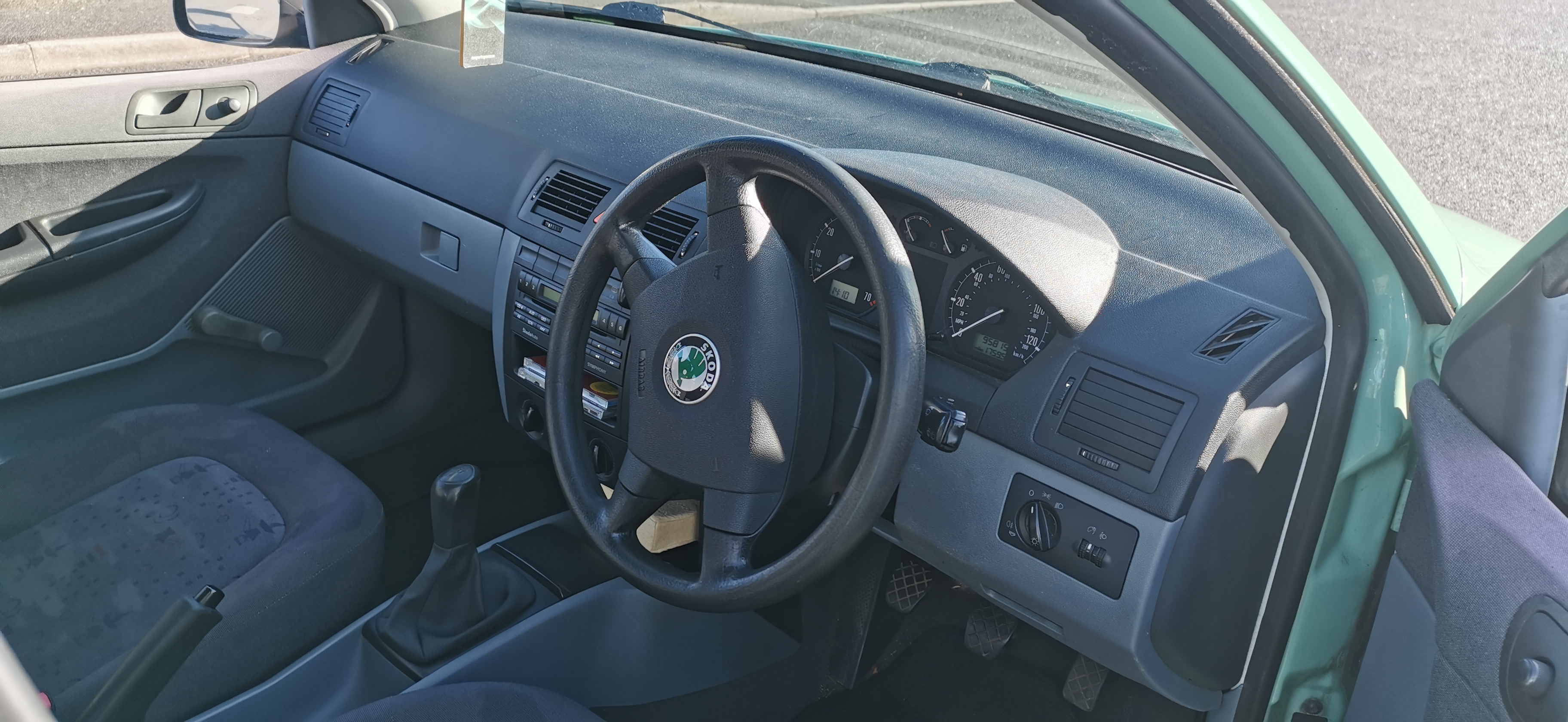
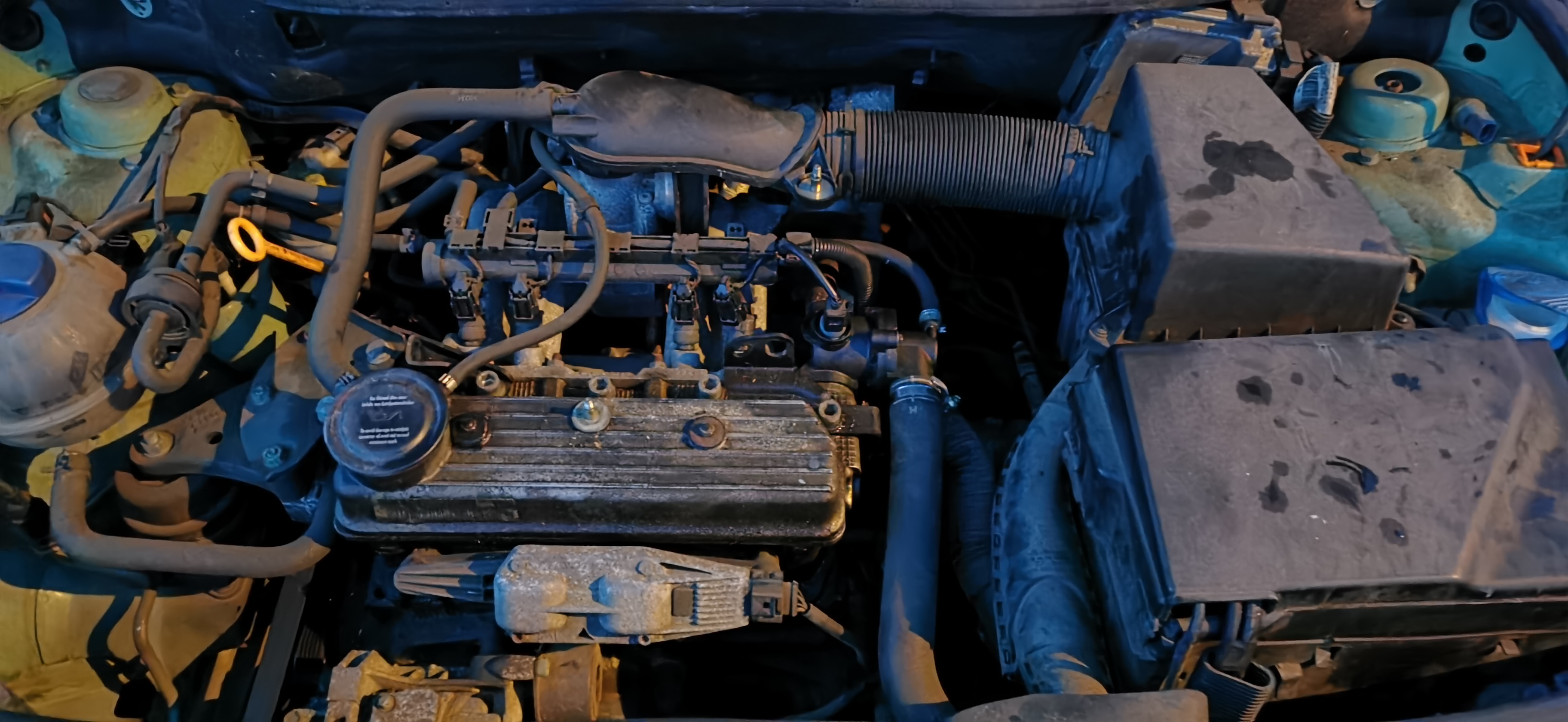
Well, it’s a Skoda Fabia 1.4 MPi Classic Combi which is a mouthful so we call it Listerine. Well, you have seen the colour in the photos. Classic means it’s the bottom of the range, should have tried harder at school specification which has such niceties as independent locking, manual windows, a plethora of switch blanks and a steering wheel. It also has the old Skoda overhead valve engine that dates back to when God was a lad. Combi is Skoda talk for estate car, which translates into a thoroughly useful car.

Don’t tell me somebody bought that new!

Check dat ass…

What’s baffling about this particular car is that someone specially ordered it. They ordered an estate with the least powerful, most archaic engine available in a colour that no one else ever specified with an equipment list that the Tory austerity cuts look generous. Yet it was ordered with a CD player player player player (a tape deck was standard equipment) and air conditioning! I really don’t get that, as the resale value of this model, trim, engine and colour spec would have been pretty poor compared with other models in the Fabia range. But judging by the service history on this car, resale values were of no interest to this owner because they kept it for about 15 years, was garaged and had it serviced and maintained at a Skoda dealer for all those years.

So, what’s it like to drive?

Well, fairly uneventful to be honest. The steering is light, the handling is safe but not particularly involving, the brakes are pretty good but the gear change is on the obstructive side. Which is just a plain nuisance sometimes as it’s under powered and gets easily confused by hills. As mentioned earlier, it’s fitted with the old Skoda pushrod overhead valve engine. Whereas it was a 1.3 litre engine in the Favorit and Felicia, for the Fabia it was modified and bored out to 1.4 litres, producing a nausea inducing 67bhp. I have no idea what the top speed is, and as far as acceleration goes, I started a 0-62mph standing start back in December 2020 and I haven’t got there yet. However, once you get up to speed, it’ll happily sit there all day (providing there’s no hills) with very little fuss though the engine does get rather rough the further you get up the rev range, but the rest of the time it’s not too bad. But then again, being a rip-snorting bahnstormer was never at the top of Skoda’s priorities when designing and developing the Fabia.

What’s it like to live with?

50 shades of grey. But definitely not LIKE THAT

What was on the top of Skoda’s priorities was providing practical and functional motoring, and when you look at the Fabia in its original context, it’s hard to beat. Especially in estate form, because it provides a decent amount of interior space in what is essentially still a supermini, but with the added bonus of that extra boot space. Certainly one of the most useful cars I’ve owned. It will swallow up our shopping with consummate ease, it will take our vast amounts of luggage that my wife deems necessary for a holiday and we can fit our tent and camping gear in the back. Even better than that is the rear seats are not only 60/40 split folding affairs, they can be completely removed. The front passenger seat folds flat so it becomes a van if required. For a small car, it’s also reasonably comfortable and whilst you couldn’t call the interior pretty or even remotely stylish, it’s functional and fairly robust. This little Skoda can take on anything that people claim they buy an (usually two wheel drive) SUV for. Bollocks, you don’t need an SUV, a Fabia is all the car you’ll ever need. Oh, no, wait, that was another car wasn’t it…

Is it green?

Yes. Fantasy Green, in fact. Which is the same green Jeremy Clarkson used to paint the “Police” Fiat Coupe and the Alfa 75 in the Top Gear challenges.

Has it been reliable?

Speed and power. Available elsewhere.

As it happens, yes it has. We’ve done 14k miles in it so far (a bit far off the 40k target we’ve set ourselves).
Stuff that’s needed attention (all wear and tear and consumable stuff)
– Brake hoses, rear cylinders and shoes
– Front discs and pads
– Anti roll bar drop link
– Tyres
Stuff that’s gone wrong:
– Temperature sensor (complete with thermostat housing): they all do that, Sir. Knew about this when I bought it so it was done pretty quickly.
– Coil pack

In recent weeks, the Fabia has had its second MoT in my ownership. Bearing in mind cars I have usually don’t normally make a second MoT in my ownership, I was delighted it went through with just a few trivial advisories which will be sorted soon. The other thing that needs attention is the timing chain which, as all these OHV Skoda engines do, is rattling like a bastard. My old Felicia rattled like this. The kits aren’t expensive and it’s not too bad a job, apparently. Well, it won’t be for me, I’ll be paying someone to do it!

Is it staying?

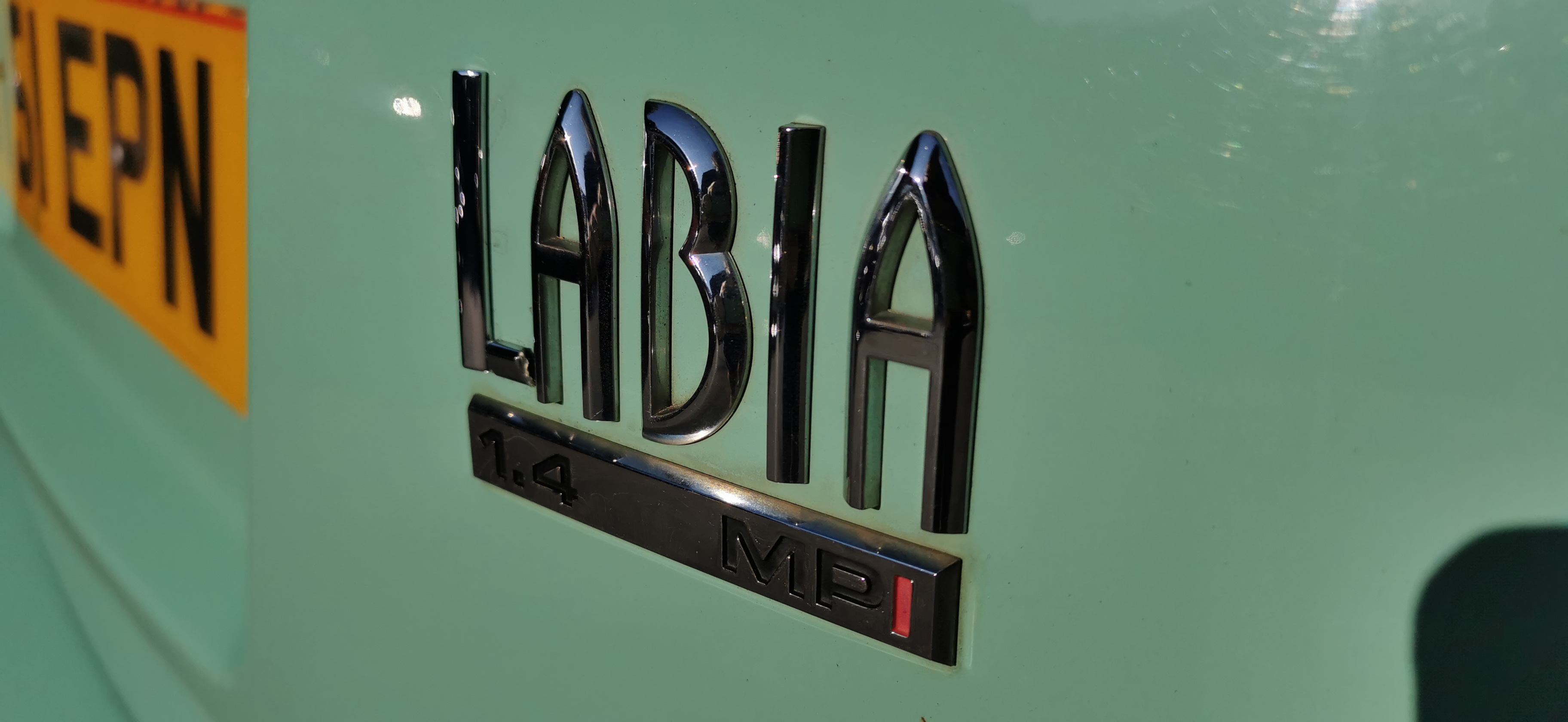
Until it gives up the ghost completely. It’s got life left in it yet, and I’m actually quite fond of the old thing because it’s a bloody good little car. Just don’t expect to go anywhere quickly. And yes, it does SAY THAT on the back of the car…

Seventeen Going Under

Sam Fender, Finbsury Park 2022. My photo.

I’ve not written anything music related for a long time, not since Ian Broudie last released something new, in fact. I went to put pen to paper about Paul McCartney’s 2018 release Egypt Station, but I pretty much felt the same as everyone else – it’s an excellent release, but the internet doesn’t need another review saying pretty much the same thing as the others. That aside, music hasn’t excited me since I was a teenager in the 1990s and truth be told, nothing has really inspired me enough to write about it. So I did write about it but it’s taken until just after the first anniversary of the album’s release to actually put it out there because of one reason or another.

So, a flashback to 2021, and I heard a song being played on the radio. Once I heard the chiming guitars I immediately stopped what I was doing and listened. That’s not happened in a long while and it was refreshing that here was something that sounded different to the vast pool of mainstream music I’ve been subjected to in the last however many years. Those guitars sounded great, but so many times I’ve heard a great intro and wanted to switch the radio off as soon as the singer opens their mouth. The singer opened his mouth with a delightfully North East twang so I had to carry on listening. I don’t pay huge amounts of notice to the lyrics on listening to something for the first time, and the first thing I thought when the full band kicked in was “he’s listened to Bruce Springsteen”. Thumpy drums, a bit of saxophone and, best of all, the glockenspiel’s nod to Born To Run. Yeah, this was something good, this was going to be big. The DJ thought so too. The song, as I’m sure you’ve probably guessed by now, is Seventeen Going Under by Sam Fender. And it even has an obligatory woah-woah refrain to get the crowd singing along at gigs and festivals, something that I did at Finsbury Park.

I heard the song a good few times, enough to be won over completely by the melody and the playing. I delved into the lyrics, realising this is pretty much an autobiography condensed into five and a half minutes. Written in lockdown whilst Sam was in isolation, it deals with toxic masculinity, teenage angst, bullying and dealing with anger. The bit that really hits home hard is witnessing in words a seventeen year old Sam Fender dealing with a situation where his Mum had to give up work for health reasons. The Department for Work and Pensions didn’t give a flying fuck and he’s willing to do anything to keep a roof over their heads. Even if it meant resorting to shady dealings with shady people. These are lyrics forthright and honest. Personal, but not giving everything away.

Getting Started seems very much Seventeen Going Under chapter two. Here we find Sam still dealing with the situation with his Mum but a year on. But the message in this song is it doesn’t matter what you’re going through, or what may be happening around you, sometimes things get too much and you need a release. Life can be overwhelming, sometimes you have to let go and let off some steam. But there’s air of optimism. Steve Van Zandt has sung this song’s praises, and my God does this song take on another dimension performed live.

Elsewhere on the album we have some observations on the current climate. Aye is a ranty fucker of a tune that engages in societal issues whilst rocking out. It shows contempt for tax dodging billionaires, and touches on the division between rich and poor, the nitpicking and squabbling between the left and right and a lack of political identity and focus. In the current political state of this country, can you find a more relatable song out there presently? See also Long Way Off, which as the title suggests, we’re a long way off from an ideal political climate and right now in 2022 this seems even more apt. We have people, old and young, struggling to feed themselves or heat their homes, and in some cases having to make a decision to eat or heat. Foodbank use is at an all time high. “The hungry and divided play into the hands of the man who put them there”

Elsewhere on the album, Sam sings about insecurities and self esteem issues. Get You Down sees Sam delving right into the past and those issues from childhood rearing their ugly heads, which end up negatively impacting and sabotaging relationships. There is also an air of defeatism on the album, as he points out what he’s got wrong or done wrong. What really strikes me is Sam’s level of self awareness in his lyrics.

Spit of You is where it really hits home, though. Many people over the years have composed a Father and Son relationship song, but none of them have come close to this and none of them have I related to more. Much like the song implies, I can talk to my Dad at great lengths about cars and music and have a laugh. Inconsequential stuff, in the great scheme of things. I can’t talk to him about feelings or anything deep. Also, politically, we’re polar opposites. My Dad was brought up in Liverpool, so talking about feelings is an alien concept for men of a certain generation, especially those that hail from the North of England. My temperament is pretty similar, too. Many times the phrase “You’re just like your old man” has been thrown my way. But I’ve seen him say goodbye to his Mum, Dad and three of his brothers, and what breaks my fucking heart is one day that will be his forehead I’m kissing. And I’ll still look exactly like him. This song gets me in the feels every damn time, so as I’m sure you can imagine, I was a gibbering wreck when I saw him perform it live in Finsbury Park. Thankfully, I wasn’t the only 40-something year old bawling their eyes out at the concert.

Crying at a rock concert didn’t stop there, either. And nor does it when I listen to this album. If you’ve not listened to Dead Boys from Sam’s first album, it’s about the male suicides that happened in his home town and struggling to comprehend it. It’s one of the best songs on Hypersonic Missiles. One of Seventeen Going Under’s finest moments is The Dying Light, which is a sequel to Dead Boys. It’s sung from the point of view of someone who wants to end it all, and indeed, it was written when Sam was at one of his lowest points. However, the song is a triumph, a will to keep going if not for himself then for “mam and Dad and all my pals” and “for all the ones who didn’t make the night”. I’ve been at this point where there seemed no way out. So has my oldest and closest friend. And some of my other close friends have had loved ones who didn’t make the night. Dead Boys stopped someone from killing themselves, and this will have the same impact. And I’d like to take this opportunity to say if you’re in a bad place, please find a friend or someone who will listen and talk to them, let them help you. And if you’ve got a mate who is in a bad place, give them a hug. Make sure they know they’re important and that they’re loved. Let them talk to you and make sure you listen to them. It’s 2022, the stigma for mental health should be banished and the lack of acceptance for men sharing their feelings should be consigned to the bin, too.

With Seventeen Going Under, Sam wears his influences on his sleeve. It doesn’t break any new ground musically, but then again it doesn’t need to. What you do get is some cracking melodies that you’ll be humming for days and worldly wise lyrics, wise perhaps beyond his years and one of the most relatable long players I’ve heard in years. But it’s not just Sam that makes the record an absolute blinder. He’s got a damn good band with him, too, and what’s refreshing is they’re not just hired hands paid to play whatever music they’re given. These lot are a bunch of mates, and Dean (Thompson, guitarist) and Drew (Michael, drums) grew up with Sam. They were probably egging the local Co-Op together, lobbing bottles of Olivio and not paying for those pesky carrier bags making the shopkeeper sod off home to cower under his sofa.

So, what’s the album like a year on? What quite often happens with albums is there’s a honeymoon period where they are played repeatedly, lose their appeal and sit on the shelf for ages. Not so with Seventeen Going Under. I can play the album now, and still do with regularity, and it still sounds as good as it did and I simply don’t tire of it. The quality of the songs and the way I can relate to them will make sure this stays a regular play for many years to come. Especially as there’s been some brilliant memories made and now attached to this record with family and friends. Albums don’t come along like this that often, but it does make me look forward to see what that canny chanter from North Shields does next. Thanks Sam, the last 12 months has been a blast and Finsbury Park was epic.

One for the (R)over 25s

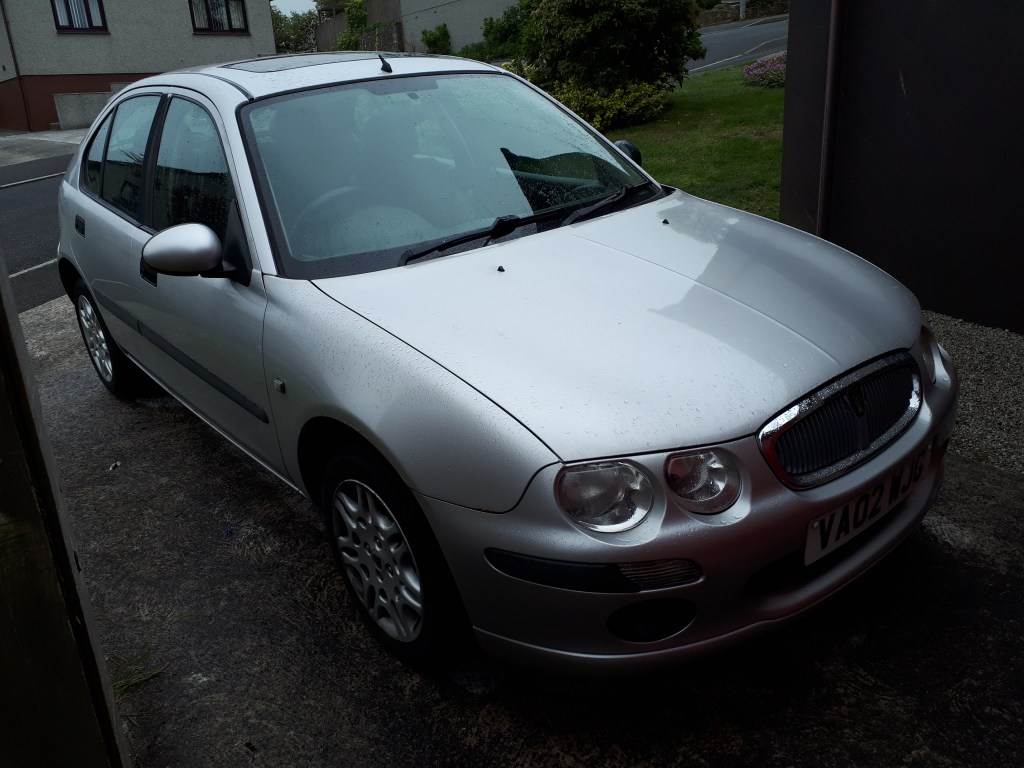
A Rover 25. Thrilled to be here, aren’t you?

Buying old shite (the term Bangernomics is the same thing and was coined by a well known motoring journalist) is a hobby to some, a way of life to others and for some people, a necessity. I pretty much fall into all three camps and have owned all manner of different old bangers over the last Lord alone knows how long. Some have been great, some have been absolutely bloody appalling, but I’ve wracked my brain and I think I’ve come up with the ideal candidate. It fulfils the brief in two ways: buy it and run it until it breaks, scrap and repeat or it’s something you can buy, keep roadworthy for a good few years without having to spend massive amounts of money doing so. It’s also simple enough to work on that most jobs can be done at hoem if you can use a socket set.

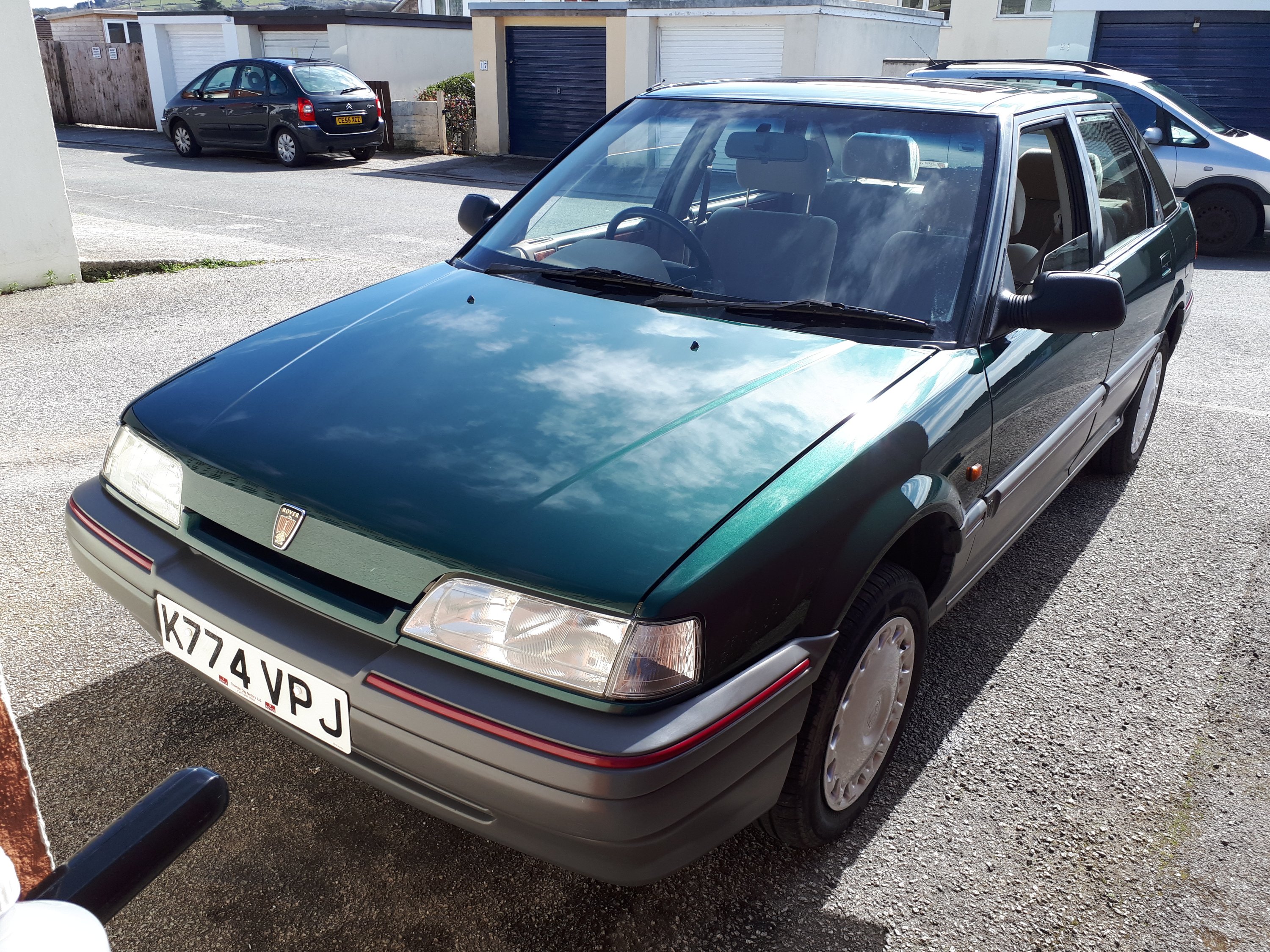
It’s the R3 type Rover 200 and later 25. A car that pretty much lived in the shadow of its predecessor – the R8 200. The R8 was a serious engineering exercise that was good to drive, practical, stylish and felt a cut above its rivals. However, these are rising in values now as they transcend from banger to strictly for enthusiasts status and are a bit too nice to simply buy as a workhorse. But that is where the R3 steps in.

When new, the R3 200 had to put up with not being quite as big as the R8 and as a result, a bit more claustrophobic inside. It had to put up with Rover’s hopeless marketing team projecting it into the class above. It was fairly expensive when new compared with the opposition, and a bit of wood and leather didn’t fool people into buying premium. Which is a shame, because premium cars are all the rage these days thanks to the car badge class system. In 1999, though, Rover decided they were wrong. They face-lifted the 200 which brought in a new front end similar to the 75 and other minor aesthetic refinements. There were also technical upgrades including suspension and steering. More importantly, though, the whole range had been realigned and repriced to compete with Fiestas rather than Focuses. The 200 became the 25 and was a better car.

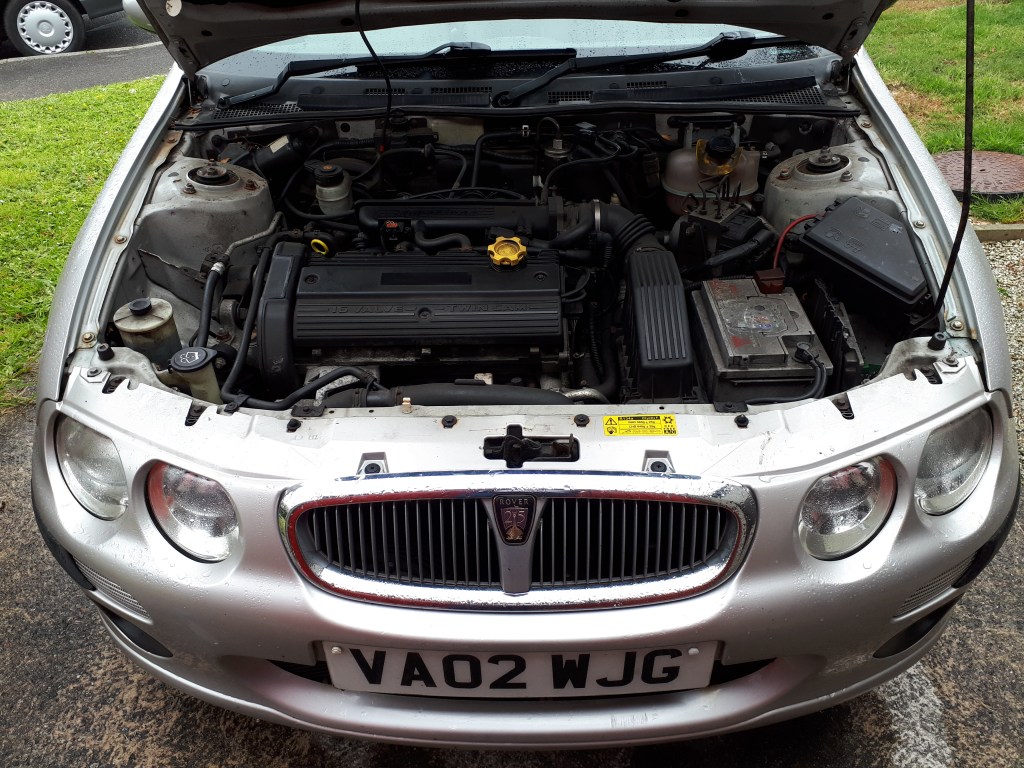
All R3s were powered by the and the rough and ready but tough L Series diesel engine, and the – at the time – acclaimed K Series engine in 1.1 8 valve form right up to the 1.8 16 valve with variable valve timing. But we all know the stories of that engine, don’t we? If not, them I’m sure some smart arse will be here shortly to question how many MPG (miles per gasket) one has achieved from one’s K Series powered machine. But fear not, I’m not about to recycle All The Internet and go down that route.

Special K. I prefer sultanas.

Instead, I’m here to extol the virtues of the R3 because none of the above matters now that the car is far from being new and is worth about about the same as a pint of beer. As an aside, a good mate of mine bought a Rover 45 for the princely sum of £3.19, MoT’d it and put it into daily service. I’ve driven it and it’s a bloody good little car. I’ve owned three versions of the R3 – two Rover 25s and an MG ZR. I’ll concentrate on the Rover versions because the MGs are starting to rise in value.

The R3’s party piece really is there isn’t an awful lot to go wrong on them, and what’s left is usually easily fixable. There’s no CAN networks or body computers to upset proceedings and render the whole car scrap if one of those related components happens to fail. The L-Series diesel is a sturdy old Hector, too. It may sound a bit Massey Ferguson, but it’s a strong engine and will rack up the miles with very little in the way of problems. There’s a reasonable parts supply with service items available from most local motor factors, and a handful of MG and Rover parts specialists online for everything else – or even genuine service parts if that’s what you require. Additionally, there are a few companies that specialise in K Series repairs and at least one of them is mobile. So if worse case scenario happens with the cooling system, it can be put right by a specialist for not a massive amount of coin, providing years of motoring ahead. Aside from the K Series, the other main bugbear is rust – they do like to corrode a little. Pre-Project Drive examples are the best to go for (manufactured between 1999 and 2002) as the rustproofing worked then better than the final few years. The front wings can go at the leading edge, they can get a little tatty around the wheel arches, around the boot lock, sills and floor. The earliest incarnation of the R3 – the 200 – are dwindling in numbers thanks to the newest example being 21 years old. However, it’s not necessarily difficult to find a good 25 there still seems to be quite a number of those still on the road. Largely to do with Rover’s demographic audience being older and retired folk who actually looked after and maintained stuff and the refreshing lack of being equipped to the maximum with needless electrical twattery, allowing more time to consider the exquisite engineering.

This is a 25 Steptronic. Or at least it was. It’s now UP WIV DA ANGLES.

Perhaps the only thing to throw up any real drama is the CVT gearbox, known affectionately by some (at least three people) as BoingDrive. The example photographed here was a 25 iXL BoingDrive that was purchased for £300 and did 12,000 miles in the 12 months we had it. The drive plate sounded like a group of skeletons having an orgy in a tin and the starter solenoid wire needed repairing. And aside from a small patch of welding on the sill and a clean up of the rear caliper, it cost next to nothing in maintenance costs. I never serviced it or did any preventative maintenance, it just never let us down. Until one fateful day where the new custodian drove it 10 miles and the gearbox was beyond needing some fine adjustments. It was later scrapped. Avoid the CVT and buy an example with the manual gearbox because the PG1 gearbox is tough, and the last year or so of production the 25 was equipped with a Ford Focus gearbox so there was at least a decent gear change.

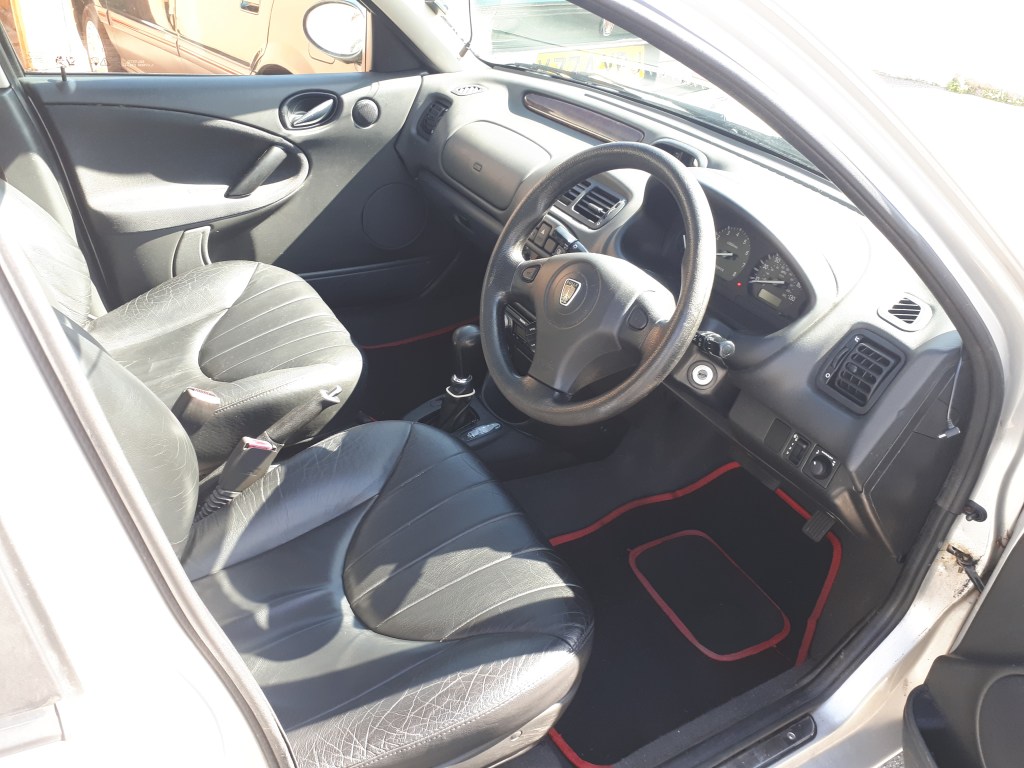
But what else do you get? Well, they’re a decent steer for a start regardless of what version you go for. The steering has good feedback, the handling and ride are good, and depending on which engine you go for, have a reasonable turn of speed, too. The L Series diesel can be turned up for OMGBOOSTZ and everything. There’s a reasonable amount of room inside, and we managed with an R3 as a main family vehicle from when my son was a toddler up until last year. You’ll also get to experience Rover’s batshit crazy equipment levels and options. Indeed it was possible to have wood, a full leather and air conditioning, yet still have keep fit windows. My pick of the bunch would be the 1.6 petrol as it’s a decent all-rounder, and if you find one that’s already had the work done to the h*** g*****, it will provide you with a good few years of reliable service. Just keep an eye on the rust, avoid the CVT and check the sunroof doesn’t leak.

Consider the interior shown

If you look back through this blog, you’ll find the low down on my first Rover R3 ownership experience. If you can’t be bothered to find it, I’ll waste your time a little right here. Our daily driver was driven into by a moron in a Laguna in a shopping car park. The insurance company wrote it off and collected it two days before we were due to go away on a family holiday. A hire car was going to cost north of £380, but at the end of the our road my wife spotted a Rover 25 for sale for £475. She phoned up the seller, haggled a bit as it needed a tyre, got it down to £430. We then went and bought it, raced down to the post office to tax it and then on to the local tyre fitters. This was Wednesday afternoon into the evening, and we were going away early Thursday morning. The general attitude was use it and abuse it on holiday and if it breaks, bin it. If we didn’t get on with it, bin it off and get something else.

We kept it. For another 18 months where it clocked up 18,000 reliable miles. I never thought much of Rovers before this car, now I’m a big fan. I replaced it with an MG ZR TD+ but actually preferred the Rover. I fancy a Streetwise next…

The car that started it all. Need a Streetwise next.
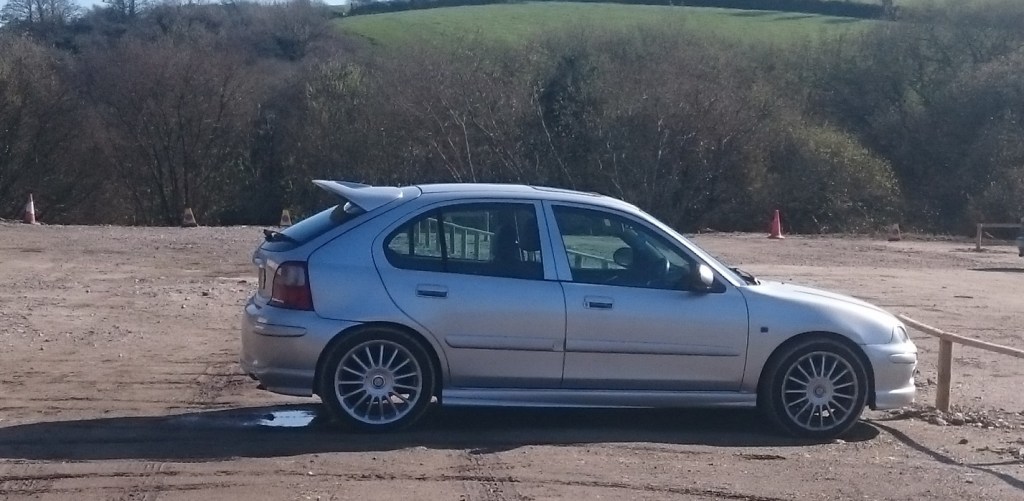
MG ZR + TD. Handled bloody well but the seats gave my wife sciatica.

Wherefore art thou Romeo

Difficult to find a good one these days

It’s been a wee while since I’ve written anything in here but it has been business as usual chopping and changing cars at an alarming rate. I still have the Rover 216, and that’s a car I’m never likely to sell. But I’ll come back to the other cars at a later stage. The object of this post is to write about what has (twin) sparked my blog writing back into life.

I’ve been an Italian car licker for longer than I care to remember – actually thirty years ago this year. My Dad had a long line of brilliant Italian cars which started off with an Uno 70S and a Tipo DGT. My first car was an Uno 45S, and between me and my wife we’ve owned 13 Italian cars up until the car featured here. So far, though, they’ve all been Fiats. What has alluded me so far is an Alfa Romeo. Just saying the name evokes the usual journalistic clichés of passion, soul and spaghetti. It’s a brand that has resonated with me since I was a small boy – one of my first toy cars was an Alfasud Sprint. Alfa have had their fair share of ups and downs (I am going out of my way to not mention the R word that crops up in just about every piece ever written about Alfa, Fiat or Lancia) and have launched a few stinkers over the years. But my God have they launched some utterly beautiful machines, too. The sound of a deliciously smooth yet racy Busso V6 or the celebrated raspy twin cam is enough to send me all gooey eyed and weak at the knees. Similarly, if I see an Alfetta GTV, a 105 series GTV, Alfasud Sprint or an old Duetto I instantly need some time to myself.

I worked in aftersales at an Alfa and Fiat dealer for best part of 10 years so have seen how bad they could be. However, I’ve also seen how bloody brilliant they can be, too. So, why haven’t I owned one, yet? Mainly because I subscribe to the kind of motoring dubbed as Bangernomics. So my idea of a Bangernomics friendly Italian car automatically defaults to Punto, of which I’ve had four. A V6 Alfa or Twin Spark is likely to need a bit more love and money than someone on a Bangernomics budget can throw at it. But does that mean it rules out Alfa ownership altogether?

Great bodywork

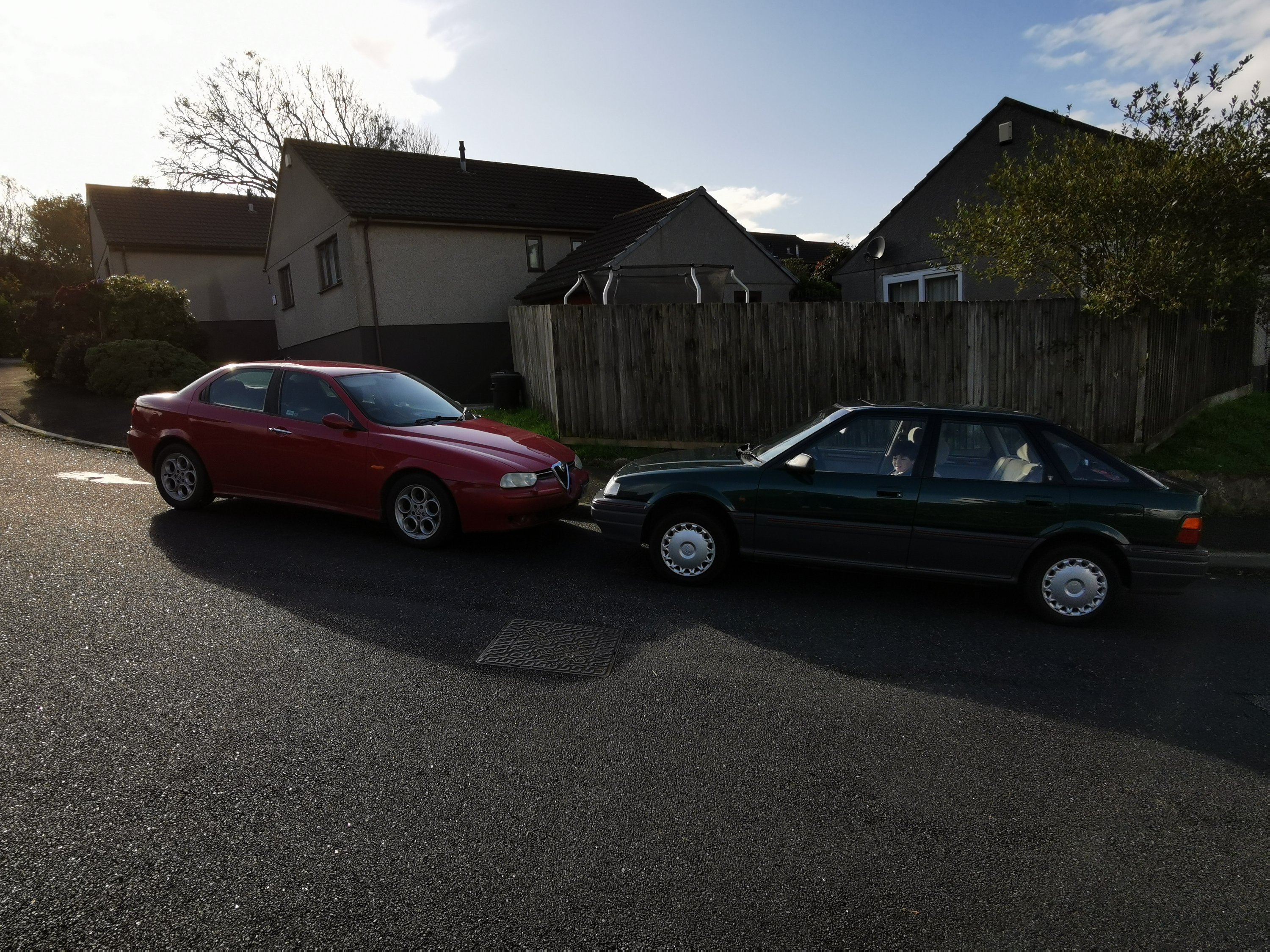
No, not at all. Cars such as the 147 and 156 are at such a low ebb pricing wise that they’re pretty much disposable motoring, which in one sense is a good thing as they can picked up for next to nothing. But it’s a shame as 147s and 156s are such good cars, why on earth would you buy one to run it into the ground? To satisfy both sides of that coin, we’ve bought a 156 JTD for pocket money in terms of car prices. The purchase price satisfies our Bangernomics budget, yet it’s a car that deserves to be maintained and have some coin thrown at it.

A very good friend who we’ll call nameless and will remain Craig Cheetham contacted me to tell me he had “the ideal car”. I loved the idea, but Mrs Captain Misery said no and that was that. The car in question was a Fiat Multipla 105 JTD ELX and I loved the idea of owning it – the perfect family vehicle and would satisfy Mrs Captain Misery’s mourning for her dear departed Vauxhall Meriva. But it was a resounding NO. A few weeks passed and Craig contacts me again with “I’ve got the perfect car for you” and Mrs Captain Misery said yes and that was that. A few weeks later we had an Alfa 156 JTD on the driveway.

Showing you my interior

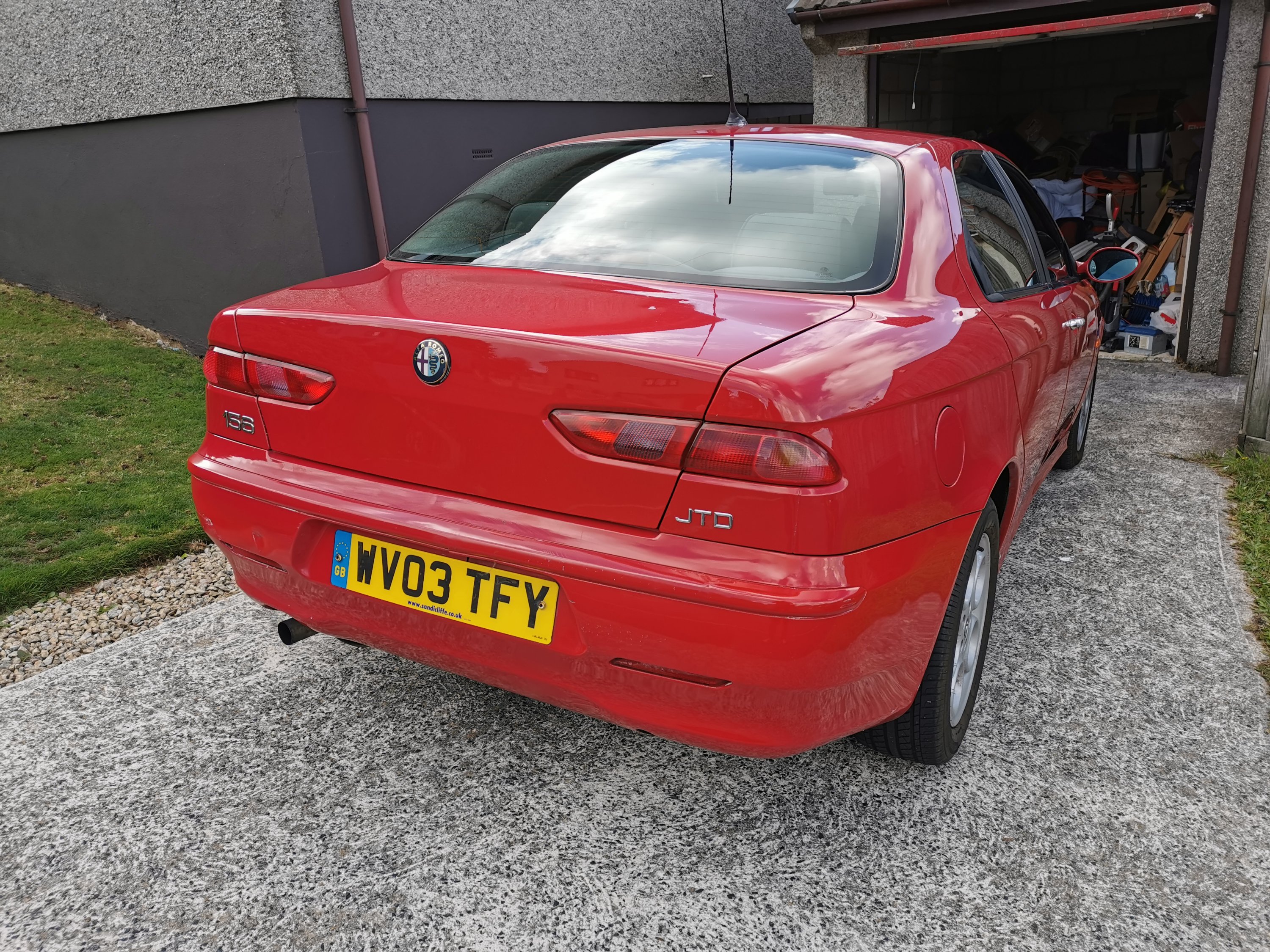
The 156 has been around since 1997 and changed Alfa’s fortunes for the better overnight. Sadly, it changed Alfa’s fortunes for the worse overnight, too. I’ll gloss over the minuses to wax lyrical about the 156 for a moment if I may. It remains the best looking saloon car of the last twenty five years. I still maintain that no saloon car since has looked so right and so damned pretty. Even the facelift didn’t ruin the looks. Then there’s the interior, and yes if you were Autocar you could complain about plastics used on some of it, but come on, how often do you stroke the dashboard when you’re driving? It still looks utterly fabulous from the cowled dials housing the rev counter and speedo, to the dials in the centre console, all angled toward the driver. It’s very driver focused and a lovely place to sit. It’s also easy to find a comfortable driving position and the seats are great.

I could go on for hours about the exterior styling. I have done before and some people have died of boredom as I spoke. So I’ll just leave it at the exterior is a work of art. Even this one, which is a bit of a ten yard car if I’m honest, still looks good. Being a sixteen year old 156 means there’s literally many shades of red and there’s the odd bit of lacquer peel here and there. But to be honest, the exterior and interior wear the 181,000 miles pretty well.

Then there’s the way these things drive. The front wheel drive chassis has always handled well, with the most balanced sweet spot of the range being the 2.0 Twin Spark. The V6 is still a gem and to be honest, the diesels are hardly horrible to drive, in fact quite the contary. Ours is the low powered 8 valve 120bhp 1.9 turbo diesel, so it’s basically the same engine as fitted to Bravos, Stilos, Doblo vans, Multiplas and Vauxhall Vectras. Even so, whilst not being the fastest thing on four wheels and sometimes it lags more than George W. Bush’s brain, keep the turbo spooling and the performance is more than acceptable and it can upset quite a few [insert German generic saloon here]. You still get the pin sharp turn in and the delightfully weighted and communicative steering. The downside is the ride is a bit crashy over British road surfaces (what have the Romans ever done for us?) and the turning circle is worse than the Starship Enterprise.

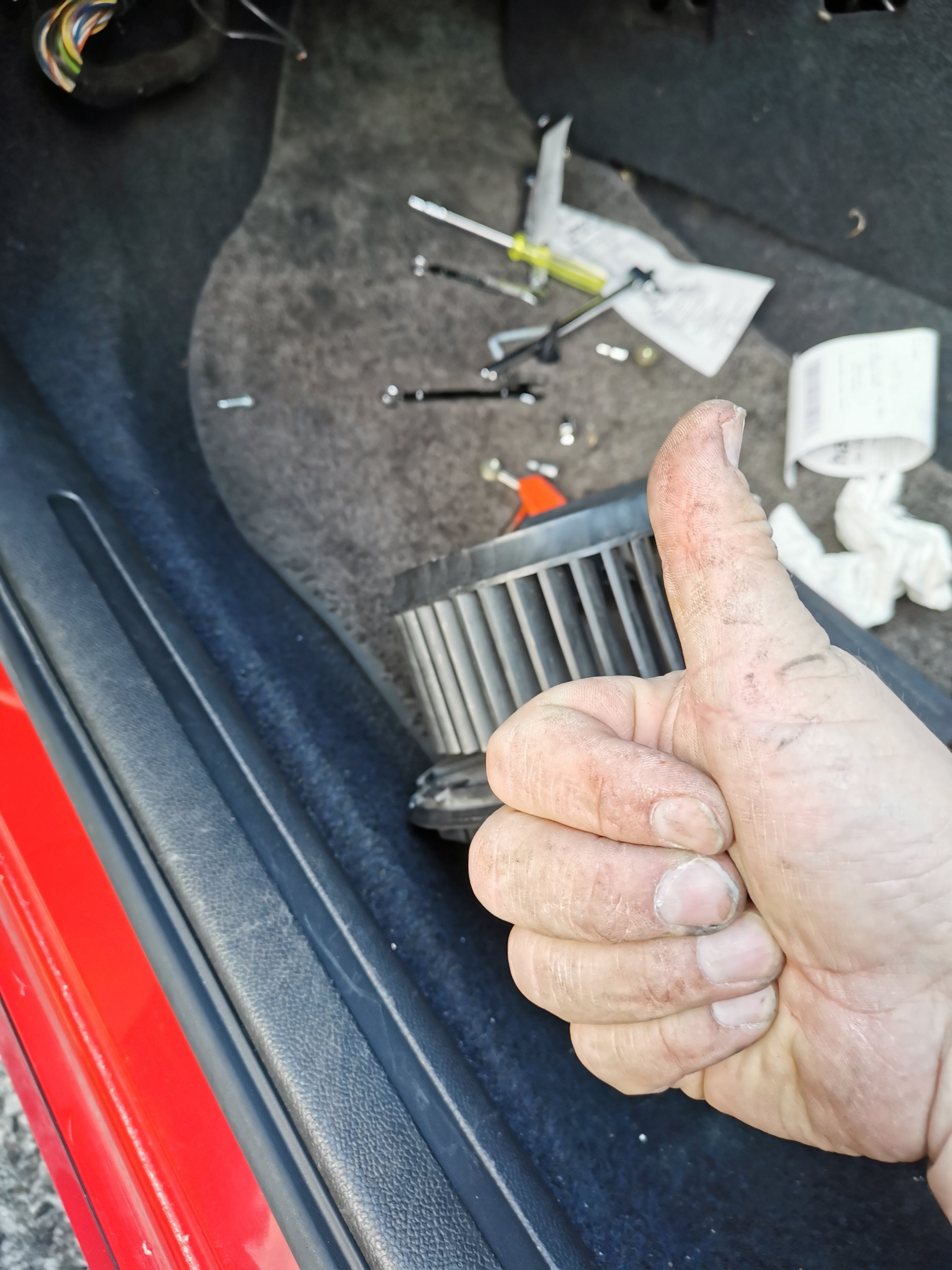
Heater motor a commom fault but a simple fix

Now, being a sixteen year old Alfa with (at the time of purchase) 177,000 miles on it, there were a few issues which I was informed about prior to buying it. I spent a good day on the paintwork polishing and waxing it getting it back to only 37 shades of red and bringing a bit of the shine back. The heater motor had packed up, which is a common fault and an easy fix on a 156. A replacement second hand heater motor from eBay for less than 20 quid was obtained and fitted. The surprise came when I switched the climate control on and found there to be ice-cold air through the vents – the air conditioning worked!

The battery was past its best, so a new battery was fitted, though this proved a bit of a worry as the alarm fob button on the key doesn’t work. Armed with a memory saver – a device which plugs into the EOBD port and connects to a car battery thus allowing you to keep radio codes and ECU settings etc – the battery was replaced. Upon replacing the battery I noticed the turbo hose was split, so a new one was sourced for £15. There was also an intermittent cold start problem and the glow plug warning light keept flashing. A new set of glow plugs were fitted by a very good local garage and solved that problem. However, an intermittant hot start problem developed. The most obvious culprit was the crankshaft position sensor, so a new one was sourced and eventually fitted and so far, so good. A cracked windscreen and a set of wiper blades were also sorted. In the new year, I’ll treat the 156 to a service.

As the mileometer is close to ticking over to 181,000 miles, we’ve put 3000 miles on it since purchasing it just over three months ago. None of the running repairs have cost much to put right, either. It’s great to drive, stunning to behold (if you ignore the paint fade), lovely to be in and bloody hell is it economical. Oh, and it has also had its 15 minutes of fame, too, being a feature car in Retro Cars magazine.

The purchase price of both of these combined comes to less than 800 quid. How special they feel? Priceless.

The best thing? It’s one of those cars that both Mrs Captain Misery and me look back at and smile when we walk away from it. And, at long last we have an Alfa on the driveway. Italian car number 14 is here to stay, we hope. For an imperfect car bought on a Bangernomics budget, it’s one that feels a bit special and you can’t buy that.

Click here to subscribe to Retro Cars

Phillip Joyce Automotive

Mange tout Dix Neuf, mate

Je suis Dix Neuf, non?

I’ve often made a point of how much I don’t see how car design as a whole has moved forward since, say, 1988. Sure, what’s produced today is much safer to crash into Euro N-cap rating cutouts and is much friendlier to Spiderman should he web sling in front of your Hyundai. There’s a lot more safety gear built in to protect you more should the worst happen. However, this has almost been undone by people who drive like complete idiots because they think they’re invincible and multimedia systems that may inadvertently play Coldplay. I’m really not a fan of the gadgets that weigh cars down. Do we really need all that crap, I don’t recall being asked? All that weight being pulled around by “super efficient” engines that in the real world don’t provide any more efficiency than a family hatchback from 1990, and more than likely won’t last half as long.

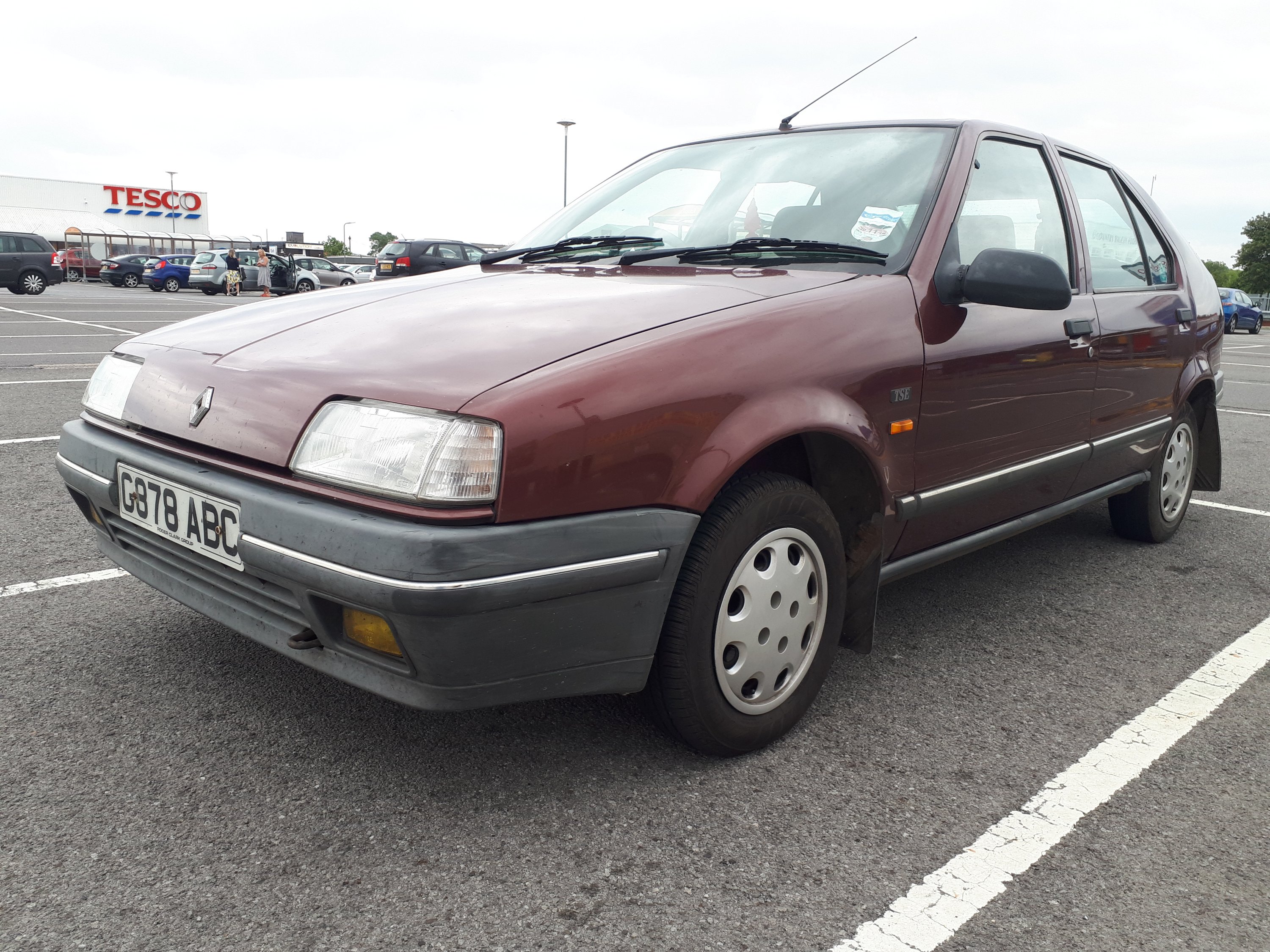
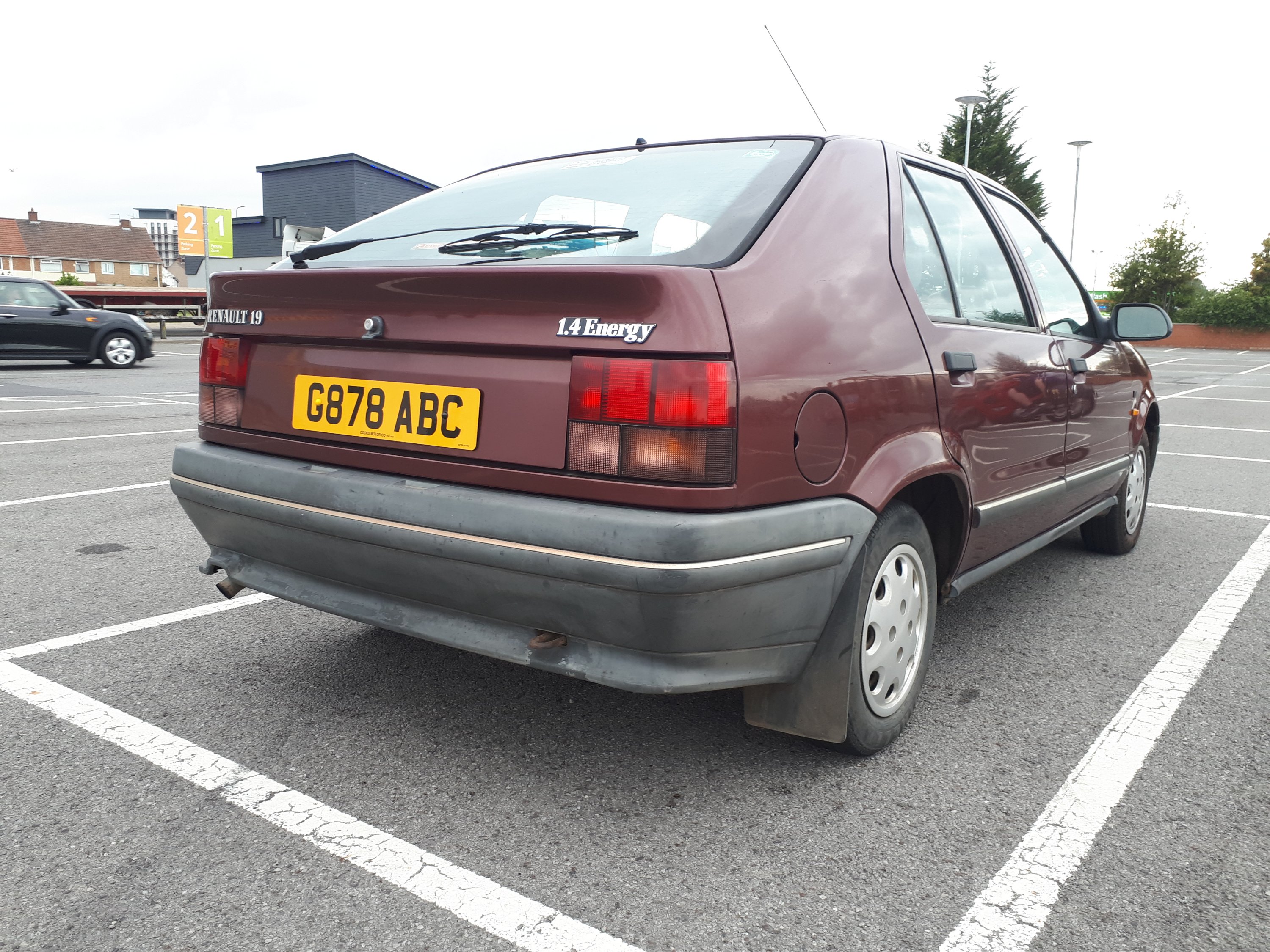
Which neatly brings me on to this 1990 Renault 19, one of the three best mid sized hatchbacks of the late 1980s. I was offered the opportunity to drive a 1.4 TSE belonging to a good friend, so naturally I had to take up the offer. Only problem being the 380 odd miles between us, so a meet up that coincided with a visit with family my wife has in the North East was scheduled.

Je suis un baton de colle. Maintenant

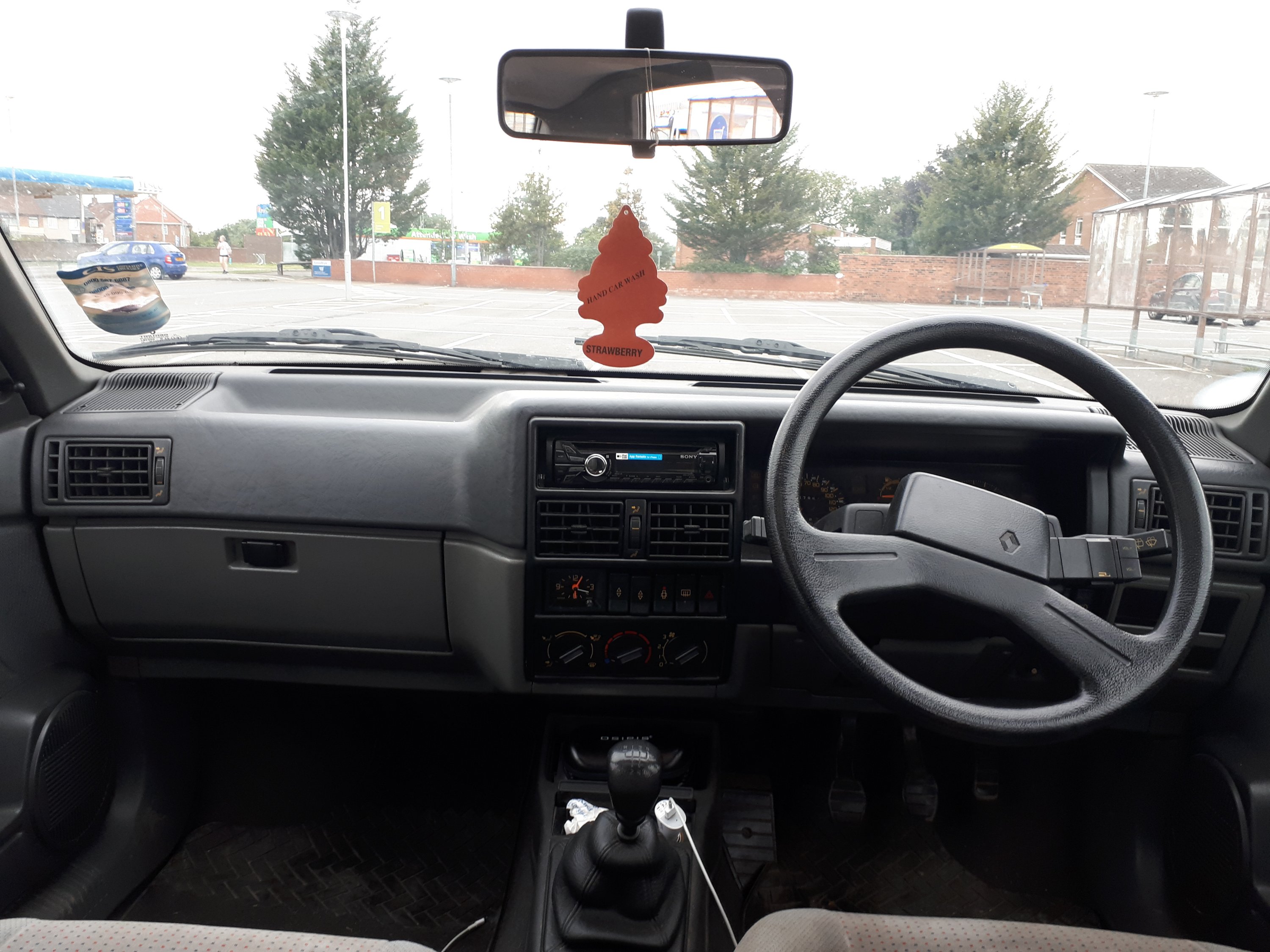
The first thing the struck me was how small it is compared with the new bloated tat that was parked all around it, yet how crisp and clean the design still is, considering this design is thirty years old. Once you step inside it’s a roomy old bus with very typically French seats. There’s a decent driving position, with pedals and a steering wheel that feel like they were fitted where they should be unlike *some other French Motor Manufacturers*.

One thing this does have that is also better than cars from *some other French Motor Manufacturers* is a bloody nice gear change and clutch action. Brakes have a nice progressive feel, too. Steering is unassisted but to be fair you don’t notice on the move and it’s weighted nicely. Parking speeds aren’t too much of a worry either.

The quality of the interior feels reasonable for the time and also looks a little more sober than some of Renault’s other 1980s offerings. It’s certainly no worse than a Golf or Astra of the time for fit and finish, better than the Tipo and leagues ahead of the Escort (both Mk4 and Mk5), though perhaps not quite up to Rover R8 200. It’s all very logically laid out and everything falls to hand easily. It’s a bit clip on headroom for me, as is the Rover R8, and doesn’t give the impression of space quite as well as a Tipo. As mentioned previously, the seats are typically French and very comfortable. Coupled with a typically French ride quality, this is a comfortable car to drive. It also doesn’t roll as much as I’d expected, but it managed the terrible roads in Billngham with consummate ease. All the bumps were soaked up in a way that is utterly alien if you’ve driven a modern Renault with 300 inch RIMZ and handling by Nurburgring.

I’m an honorary cretin!

Up front is the trusty single overhead cam engine 1390cc Renault E (Energy) engine which was new for Renault in 1988 and made its first appearance in the 19. Fitted with a carburettor, it develops 79bhp which is more than adequate to pull the 19 around. It’s lively and revs freely. Perhaps not quite as rev happy as a Tipo, but not much is as rev happy as a Lampredi motor. It makes fine progress and doesn’t cause much of a fuss doing so.

My time with this car was far too short but then a month with this car would have been far too short. It’s also interesting comparing this with the other two best mid sized hatchbacks of the late 80s, the Fiat Tipo and Rover 200. I’ve driven many Tipos, owned a Tipo Action and a Tempra and now, unless you’re blind, you’ll have seen I own a Rover 200. To summarise, the Tipo is the most enjoyable to drive and the best to look at, the Renault is the most comfortable and rides the best and the Rover has the nicest interior by far and has a fabulous sense of occasion driving it. They all do the job of mid sized family hack so much better than an Escort, Golf, Astra or 309. In fact it take Citroen until 1991 to launch a credible rival – the ZX.

But out of the 19, Tipo and 200, which do you buy? There’s never been an easier question to answer – buy a 1.4 version (1.4 Energy in the case of the 19, don’t do the Cleon engine) of each of these cars and you will not be disappointed. Buy one of each whilst you can still get a good one for peanuts. They’re simple enough to fix if a problem arises, reliable enough to use every day and each one will put a smile on your face.

Driving this car, driving my own Rover, the loan of the Mk1 Punto over Christmas and looking at the collective car collections of friends proves one thing to me – the late eighties to mid nineties car is when car design peaked and it’s not been improved on since. Cars were crisply styled, practical and fun to drive, simpler to fix if they go wrong and nowadays cost less to buy than one monthly payment on a *GENERIC GERMAN “PRESTIGE” DIESEL SALOON*. Just don’t crash one…

Special thanks to Dicky Braithwaite for not dobbing me in to the Fuzz for the taking of his French car. I have since walked home and thought about what I’ve done.

Rover 216 GSi

A Royal Roewe

I needed something reliable to use every day. Something with a bit of comfort, something with enough space that if it were used on a family outing we could actually put things in it, unlike the Ford Ka that at this point I was running. At least when it started. Which wasn’t that often, if I’m honest.

The Ford was meant as a stop gap car as there were arrangements for another car to join us alongside the Datsun. That fell through and the Datsun was without wipers and headlights, which in Cornwall is a problem as most of the time it’s dark and wet. So we were still using the borrowed Punto and the Ka was still on daily duties. However, with the Ka’s MoT due very soon and no respectable way of getting it to pass, I needed to throw it in the skip and get a new set of wheels.

This is where my mate Andrew who had been lending us the Punto comes in. He’d just purchased a car that would suit me down to the ground. It’s a little older than what I have been driving, but chances are it would start when required. So, he sent me a million and six pictures and before checking with Domestic Management I said yes to a 1992 Rover 216 GSi without actually seeing it in person. Then again, I trusted the git who was selling it.

The Rover arrived on January 14th, delivered by Andrew. So I had a cursory look around the car, thought it looked great so we went in for tea and cake. Many paperworks were signed, he handed me the keys and history file and I handed him the keys to the Ford as the mad bastard had agreed to take it back in part exchange and drive the sodding thing back home. Never have I felt so guilty handing over a set of keys in my life. No wonder he went to the pub as soon as he got home! Still, the comfort of knowing that the Ka would be scrapped very soon made quite a few people very satisfied.

The only time my Ka was made to look good. Photo by Andrew Puddick

Bugger me, this is a bit posh

Captain Mildly Luxurious

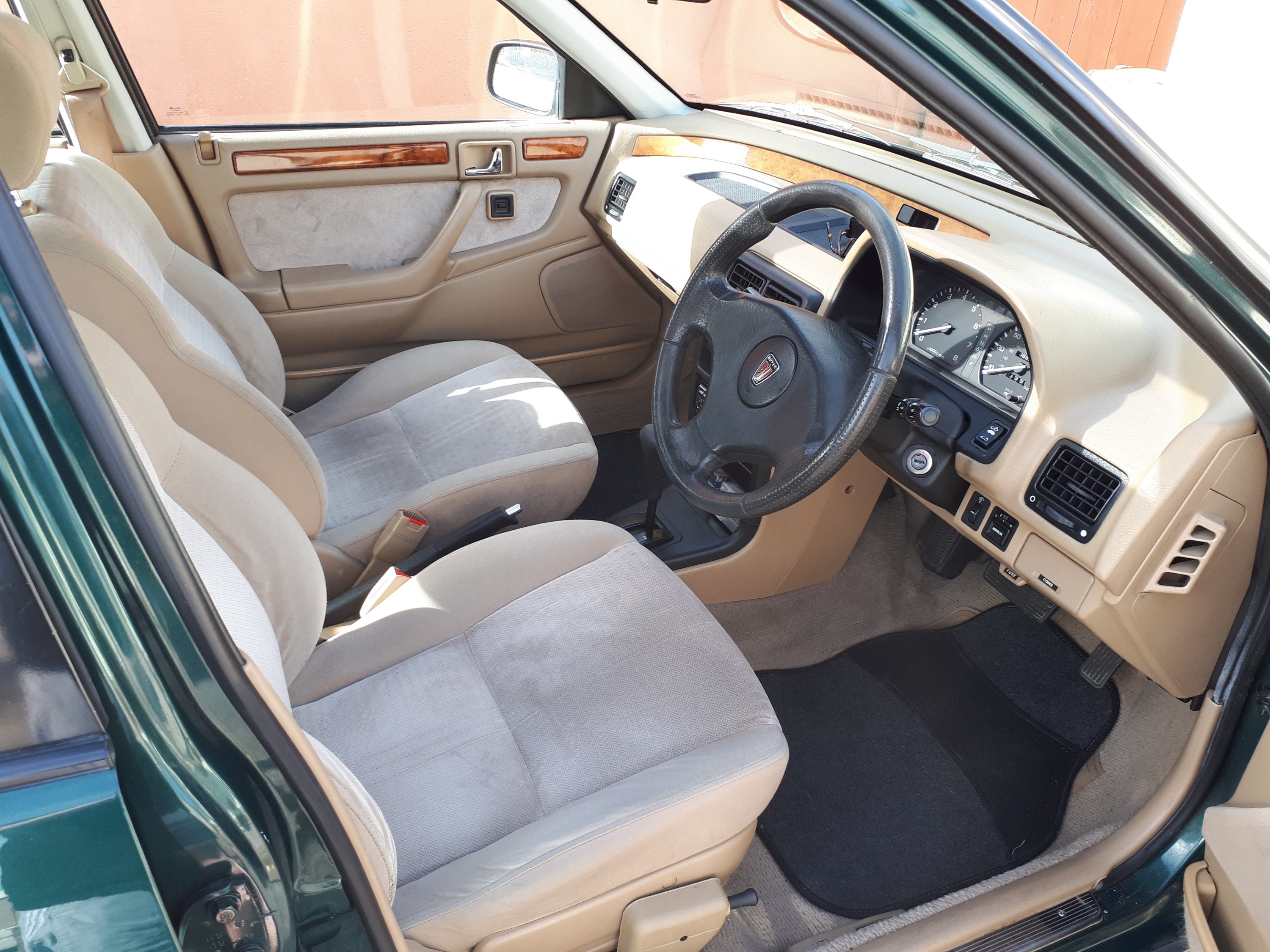
A first good look around the Rover and something became blindingly obvious. This car isn’t a bundle of misery like I’m used to. In fact, it’s midly luxurious. It has wood inserts on the dashboard and door panels and fabulous velour seats. Being the GSi spec, it also has windows, mirrors, locking and a sunroof all powered by electrical wizardry. There’s a remote boot and fuel filler release and a set of rear headrests. Why am I in a car like this? I like it. I like it a lot.

But what about oily bits? As it’s the 1.6, it comes with the Patented Obligatory Sell The Roewe on eBay catchphrase – the “BULLIT PRUF HONDA INJUN M9”. Single overhead camshaft, 16 valves developing some brake horsepower and somewhere there’s some torque. It’s coupled to a four speed automatic gearbox, and whilst it’s a lovely engine, and for the most part the gearchange from the autobox is smooth, floor it and it lets you know with a bit of a thud. The power steering has plenty of feel and it’s easy to drive, but it turns in really rather well. The brakes are no worse but no better than the 25 I had, but the ride comfort is much more settled than the MG ZR I had. Then again, Zebedee on a pogo stick was more settled than the ride in the MG. There will be things that I need to have rectified, for example the CV joints are occasionally noisy, the boots are perishing and it could do with a bit of a waxoyl underneath. There’s really not much more than that, which is excellent for a twenty six year old car.

Nice arse. I LIKE ARSES OK?

Raving queen…

Reading through the history of the Rover, it turns out it has a bit of a royal history. According to the service and warranty booklet as filled in by the dealer, its first owner was Sir General Simon Cooper of Buckingham Palace. Supplying dealer stickers and number plates are also still fitted. It’s also lovely hearing stories such as the previous owner’s refusal to let any other cars in the garage, brand new purchases included, whilst the Rover was still in her possesion. This car has been loved, and it still is. Sadly, it’s no longer garaged as there’s something else in there, but it’s looked after, washed and waxed regularly and most importantly of all, enjoyed.

That really is the key. Every single time I get in it I get a buzz of excitement I’ve not had from a car since I had my Peugeot 205. I’d had excitement in other cars but that was generally a raise in blood pressure when the bastard wouldn’t start. Or stop. The 205 I rated as being one of the favourite cars I’ve owned. I regreted selling it, even moreso now I’ve learnt it has been scrapped. I think this Rover has taken that place, now. I look back at it whenever I park it up and smile or grin. I look forward to driving it and it’s such a nice place to be.

The thing is, I had no idea whether I’d like it, despite always wanting an R8. Would it be one of those decisions that should have just stayed as a thought in my head? Like that time I broke into my neighbour’s shed dressed in a gimp suit. It was just a misunderstanding. The last car I really wanted was a Mk2 VW Golf and that turned out to be a huge disappointment and worse still an utter bastard of a car. I need not worried, this is in a different league altogether. It’s National Drive It Day this coming Sunday, but I drive it every single day and I’ve never had such positive reactions to a car in my life. People I don’t know have come up to me and complimented the car. My Dad for instance said it’s almost too nice to use, and to some extent I see his point. I think it’s too nice to have it sitting around dormant, I’d far rather be out driving and enjoying it.

Here’s the difference between my old Peugeot and this Rover. Yesterday, someone left a note under the left hand front wiper wondering if I’ll sell. Well, the answer is no I’m not selling it. At all.

Honda Injun M9. BULLIT PRUF. #foem

Getting the Point

Punto 60SX. What more car do you need?

So with a broken Datsun and a rusty, hateful pile of bastard Ford, what would you do? To us, it was obvious. Drive a couple of hundred miles from Cornwall to Southampton on a cold early December day and borrow a mate’s 19 year old Mk1 Punto to use as a daily driver. I’ve driven hundreds of Puntos of all ages throughout the years, and they remain one of my favourite small cars. So getting the chance to borrow a Mk1 was met with quite a lot of excitement.

This year is the twenty fifth anniversary of the Punto, and it still looks fresh. Compared to the modern, bloated nonsense that clogs up the roads these days, it’s crisp, well proportioned and looks just right. Packaging, too, remains a marvel. I compared this one with the inlaw’s Grande Punto, it may be smaller on the outside, but I’m hard pushed to see where the extra room is on the newer model. Leg, head and arm room is excellent, the room in the back is ample and boot space is about the same on the latest Puntos.

One of the best laid out dashboards of the last 25 years

I’m also much more an early Punto fan when it comes to the inside. The dashboard layout had stood the test of time very well, the dials are clear and the switches are well placed. This particular model is the 60SX so is equipped with such decadent niceties as windows powered by electricity, locking powered by witch craft, radio cassette with auto reverse, remote boot release and colour coded bumpers. There’s no power steering, electrical driving aids or extra safety equipment so, God forbid in this day and age, you actually have to drive the car. This is an event and is so refreshing after driving cars with over assisted everything. When did we become so lazy and reliant on the car doing most of the work for you?

As far as driving goes, Puntos of all generations are a pretty decent steer. As it had been eight or so years since I drove a Mk1 last, I’d forgotten how enjoyable they are. The 1242cc may only deliver a whisker under 60bhp, but that really doesn’t matter. Because the body weighs the same as a box of tissues and the engine is more flexible than a Jane Fonda workout routine, this is not an issue. The little FIRE unit punches well above its weight. Steering is well weighted, it’s hilariously chuckable, the handling is neat and safe and the brakes stop you when they should. But that engine is a gem.

I do have a couple of negatives, though. Firstly, the headlights are abysmal, which is a bit of a Punto trait, and Stevie Wonder’s eyes would be much more effective in the dark. Secondly, the screen washer pump failed and the reservoir wasn’t in the best of shape. Finally, it wasn’t mine to keep. Much as I wanted to purchase it from the owner, he was more keen to let me borrow it for a few months as he didn’t want to sell it. I can hardly blame him for that.

Nice arse

Never once did it fail to start, proceed, break down or indeed have anything fall off. For a 19 year old car doing over 200 miles a week, I’d say that’s brilliant. In fact, screen washer pump aside, nowt went wrong and it’s comforting to know that when we returned it, it flew straight through its MoT test the following week. Both my wife and me thoroughly enjoyed having this car for a few months, my son was sad to see it go back and if it ever came up for sale, I’d be at the front of the queue. This Punto got under our skin a bit.